

Quick Answer
The best business phone system for most UK SMEs in 2026 is Hypercloud by Connection Technologies — a fully managed hosted VoIP platform built on the 3CX engine, starting from £15/user/month with UK-based support, auto-attendant, call recording and CRM integration included. For mid-size and enterprise businesses, RingCentral (from £12.99/user/month) is the best overall cloud platform, while 8×8 leads for international calling and 3CX is best for teams that want on-premise control.
We tested and compared 7 leading business phone systems across pricing, features, support and ease of use. Prices start from £8/user/month with features like auto-attendant, call recording, video conferencing and CRM integration included. Get a free personalised quote →
How many phone lines does your business need?
Get a free no-obligation quote in 60 seconds
When does your current contract expire?
Tell us about your business
Your details
We'll never share your details. Unsubscribe anytime.
Thank you!
One of our mobile experts will be in touch shortly with your tailored quote.















Updated: April 2026 | Reviewed by: Connection Technologies business telecoms team | Systems tested: 7

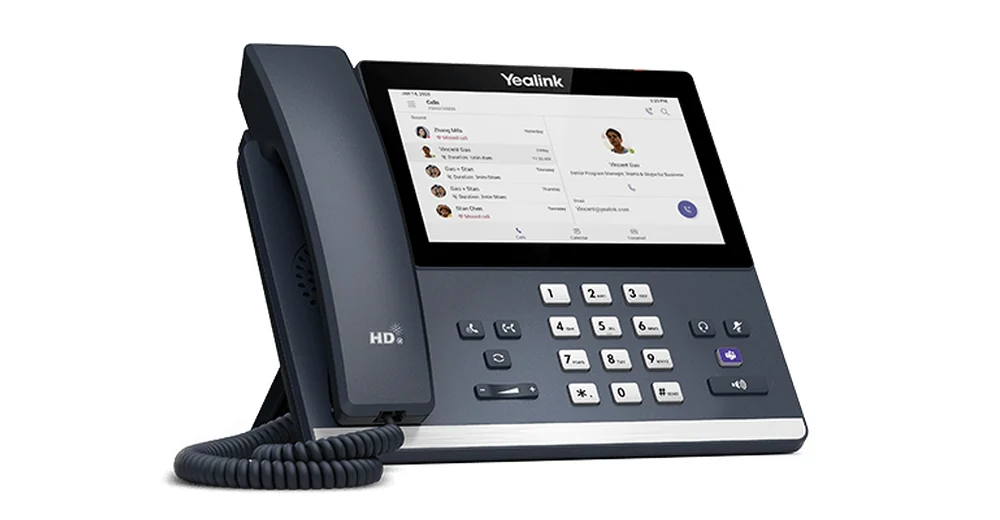
A Yealink T74W IP desk phone — our recommended handset for most UK business phone system users
What is a business phone system and why does it matter in 2026?
A business phone system is a multi-line telephone solution designed to handle the communication needs of companies, from two-person startups to large enterprises with hundreds of staff.
Unlike a standard residential phone line, a business telephone system manages call routing, voicemail, conferencing, call queues and much more — all through a single platform.
In the UK, the way businesses communicate has transformed dramatically. The days of copper-wire PBX boxes bolted to an office wall are numbered. With the PSTN switch-off scheduled for January 2027, every UK business will need an internet-based phone solution within the next nine months.
Whether you run a small accountancy firm in Manchester or a 200-seat contact centre in London, choosing the right business phone system is one of the most important infrastructure decisions you will make in 2026.
Modern business phone systems do far more than make and receive calls. They integrate with your CRM, enable remote and hybrid working, provide detailed call recording and analytics, and often include video conferencing and team messaging.
The right system reduces costs, improves customer experience and gives your team the flexibility to work from anywhere.
What are the different types of business phone system?
Hypercloud Contact Centre
For customer service and sales teams, see how Hypercloud scales into a full cloud contact centre with wallboards, AI transcription and CRM integration. Explore Hypercloud Contact Centre →
Before comparing providers, it helps to understand the four main types of phone systems for business available in the UK today. Each has distinct advantages depending on your size, budget and working model.
Not ready for a full multi-user system? A standalone UK virtual phone number from £6/month gives sole traders and micro-businesses a professional 01, 02, 0333 or 0800 number that forwards to any mobile — and you can step up to a full system later while keeping the number.
Traditional PBX (Private Branch Exchange)
A traditional PBX is an on-premise hardware system that routes calls internally and externally over analogue or ISDN lines. It was the standard for decades, but with the UK’s PSTN and ISDN networks shutting down in January 2027, traditional PBX systems are rapidly becoming obsolete.
They require significant upfront investment in hardware, ongoing maintenance and a dedicated server room. For most UK businesses, traditional PBX is no longer a viable long-term option.
✅ Pros of traditional PBX:
- Low ongoing line-rental costs once hardware is paid for
- Full on-site control with no reliance on internet connectivity
- Familiar technology for established businesses
❌ Cons of traditional PBX:
- High upfront hardware cost (£2,000–£20,000+)
- Will be obsolete after the 2027 PSTN switch-off
- Poor remote working support
- Expensive to scale — requires physical hardware upgrades
- Requires on-site maintenance and engineer visits
Cloud phone systems (hosted VoIP)
A cloud phone system (also called hosted PBX or hosted VoIP) runs entirely in the cloud. There is no on-site hardware beyond a VoIP desk phone or headset — all call routing, voicemail, auto-attendant and management features are hosted by the provider.
You pay a monthly per-user fee and can scale up or down instantly. Cloud phone systems are ideal for businesses that want simplicity, low upfront costs and the ability to support remote workers seamlessly. Read our full guide to the best cloud phone systems in the UK.
✅ Pros of cloud phone systems:
- Very low upfront cost (£0–£200)
- Predictable monthly billing from £8/user/month
- Excellent scalability — add or remove users instantly
- Fully supports remote and hybrid working
- Provider handles all maintenance, updates and security
- Future-proof beyond the 2027 PSTN switch-off
❌ Cons of cloud phone systems:
- Depends on reliable broadband connectivity
- Less direct control than on-premise systems
- Ongoing monthly cost can exceed PBX over 10+ years
Our pick: Cloud phone systems are the best choice for the vast majority of UK businesses in 2026. They combine low cost, flexibility and future-proofing. Get a free cloud phone system quote
VoIP phone systems (on-premise IP-PBX)
VoIP (Voice over Internet Protocol) is the underlying technology that powers most modern business phone systems. A VoIP phone system converts voice into data packets and transmits them over the internet rather than traditional phone lines.
VoIP can be deployed as a cloud-hosted service or as an on-premise IP-PBX. It delivers significant cost savings — especially on call charges — and unlocks features like softphones, mobile apps and unified communications.
For a detailed comparison, see our guide on VoIP vs landline for business.
✅ Pros of on-premise VoIP:
- Full control over your telephony infrastructure
- Lower per-user costs at scale (£5–£15/user/month)
- Customisable to complex business requirements
- Future-proof — uses internet, not PSTN
❌ Cons of on-premise VoIP:
- Medium upfront cost (£1,000–£10,000 for hardware)
- Requires in-house IT team or managed support partner
- You are responsible for updates, security and backups
- Less flexible for rapid scaling
Hybrid phone systems
Hybrid systems combine on-premise hardware with cloud-based services. They suit businesses that have already invested in PBX equipment but want to gradually migrate to the cloud.
A hybrid approach lets you keep existing handsets and infrastructure while adding cloud features like mobile apps, remote extensions and secure cloud telephony. However, hybrid systems can be more complex to manage and may carry higher long-term costs than a pure cloud solution.
✅ Pros of hybrid systems:
- Protects existing hardware investment
- Gradual migration path to the cloud
- Supports remote working while keeping on-site infrastructure
❌ Cons of hybrid systems:
- More complex to manage and troubleshoot
- Higher long-term costs than pure cloud
- Only partially future-proof
- Two systems to maintain simultaneously
Which type of business phone system should you choose?
| Feature | Traditional PBX | Cloud Phone System | VoIP (On-Premise) | Hybrid |
|---|---|---|---|---|
| Upfront Cost | High (£2,000–£20,000+) | Low (£0–£200) | Medium (£1,000–£10,000) | Medium |
| Monthly Cost Per User | Low (line rental only) | £8–£25 | £5–£15 | £10–£20 |
| Scalability | Poor | Excellent | Good | Good |
| Remote Working | Very limited | Fully supported | Supported with config | Supported |
| Maintenance | In-house / engineer visits | Provider-managed | In-house IT team | Shared |
| Future-Proof (post-2027) | No | Yes | Yes | Partially |
| Best For | Legacy setups only | Most UK businesses | Large orgs with IT teams | Transitioning businesses |
Best for most UK businesses: A cloud phone system (hosted VoIP). It offers the best combination of cost, flexibility, features and future-proofing. Get your free quote
Powered by Yealink & HyperCloud
Connection Technologies is an official Yealink partner. Every HyperCloud deployment includes enterprise-grade hardware and AI-powered software.
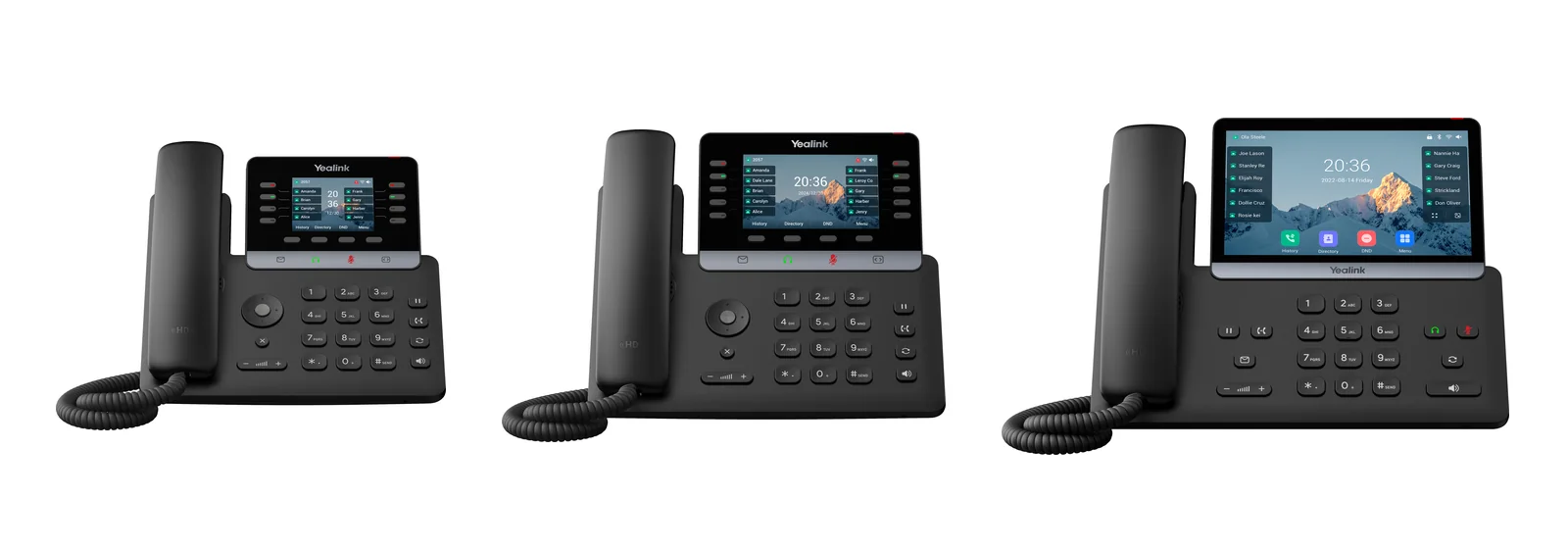
Yealink Desk Phones
HD audio, colour screens, PoE, Wi-Fi 6 & Bluetooth. From the entry-level T73U to the 7-inch touch-screen T77U and the Android T8 series.
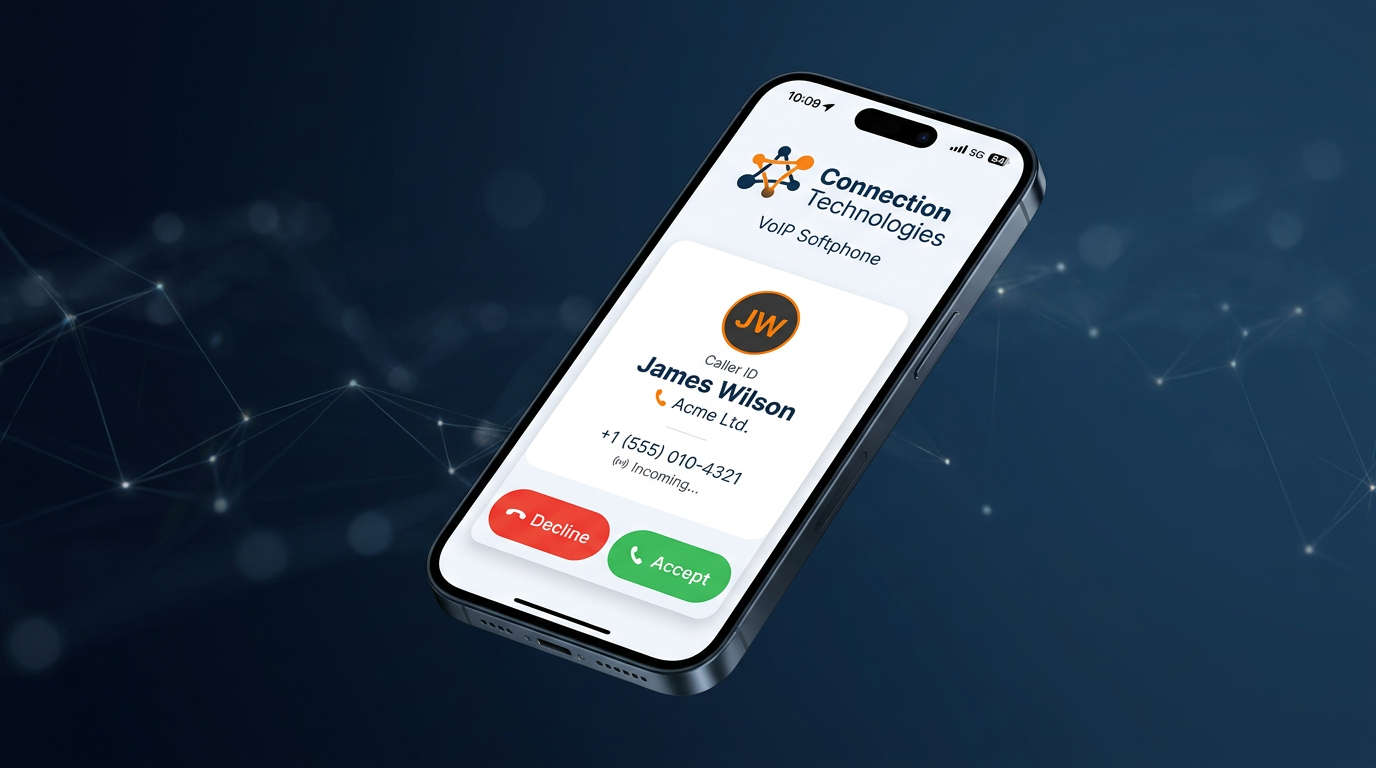
HyperCloud Mobile App
Make and receive business calls on your mobile using your office number. Seamless handover between desk phone and mobile.
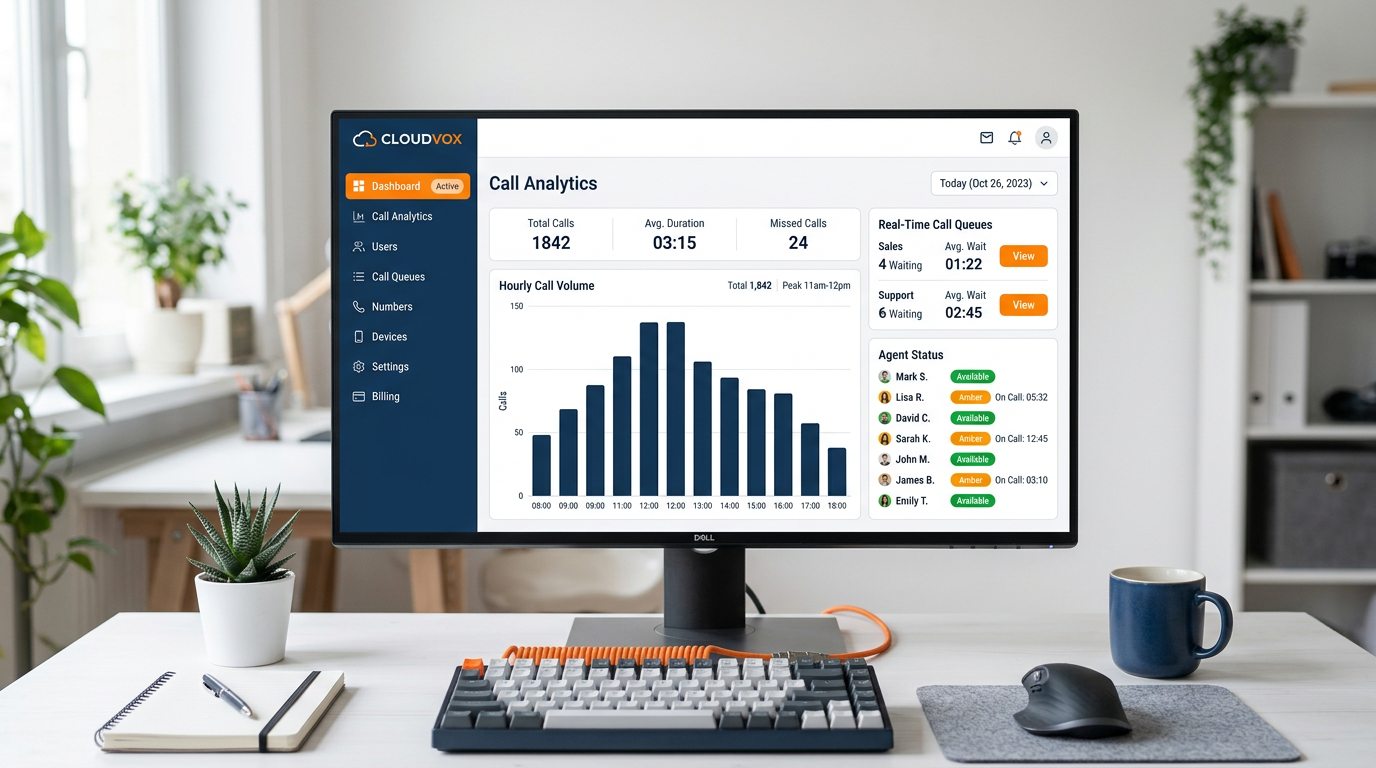
AI-Powered Dashboard
Real-time call analytics, AI transcription, sentiment analysis, CRM integration and wallboards — all from one portal.
What are the 7 best business phone systems in the UK for 2026?
We have tested and compared 7 leading business phone systems that UK companies are using in 2026. Below is our full comparison table, followed by a detailed review of each platform with pros, cons and our verdict.
| Provider | Price (per user/month) | Free Tier? | Video Conferencing | CRM Integration | Call Recording | UK Support | Best For | Our Rating |
|---|---|---|---|---|---|---|---|---|
| Hypercloud (CT) | £12 – £16.95 | Free trial | Yes | Yes | Yes (included) | Yes (fully managed) | UK SMEs wanting managed VoIP | ⭐⭐⭐⭐⭐ |
| RingCentral | £12.99 – £24.99 | No | Yes | Yes (300+ integrations) | Yes (from Standard tier) | Yes | Mid-size to enterprise | ⭐⭐⭐⭐⭐ |
| 8×8 | £10 – £25 | No | Yes | Yes | Yes (included) | Higher tiers | International calling | ⭐⭐⭐⭐ |
| 3CX | Free – £15 | Yes (up to 10 users) | Yes | Yes | Yes | Partner-dependent | Tech-savvy teams | ⭐⭐⭐⭐ |
| Microsoft Teams Phone | £7.50 – £10.50 (add-on) | No (requires M365) | Yes (Teams) | Microsoft ecosystem | Yes (Compliance Recording) | Yes | Microsoft 365 users | ⭐⭐⭐⭐ |
| Vonage | £9 – £22 | No | Yes | Yes (CRM & API-led) | Yes (add-on on basic tiers) | Yes | Developers & API integrations | ⭐⭐⭐⭐ |
| BT Cloud Work | £13.50 – £20.50 | No | Yes | Yes (limited) | Yes (higher tiers) | Yes | Businesses wanting a big-brand provider | ⭐⭐⭐ |
Prices verified April 2026. All prices exclude VAT. Actual pricing may vary based on contract length, user count and selected features.
1. Hypercloud by Connection Technologies — best for UK SMEs
Hypercloud is the hosted VoIP platform built and managed by Connection Technologies, designed specifically for UK businesses. Built on the proven 3CX engine, Hypercloud combines enterprise-grade features with fully managed UK support — so you get the power of 3CX without needing in-house IT expertise.
Features include auto-attendant, call queues, call recording, CRM integration, video conferencing and a mobile app for iOS and Android. Unlike self-managed 3CX, Hypercloud is completely hands-off: Connection Technologies handles provisioning, updates, security and ongoing management.
Pricing is transparent and competitive, starting from £15/user/month with no hidden fees, no long-term lock-in contracts and no surprise call charges.
✅ Pros:
- Fully managed — zero IT overhead for your team
- All-inclusive pricing from £15/user/month
- UK-based support team (phone, email, live chat)
- Built on 3CX engine — proven, reliable technology
- Includes call recording, auto-attendant and CRM integration as standard
- No long-term contracts — monthly rolling available
- Easy number porting from existing providers
❌ Cons:
- Less brand recognition than global players like RingCentral
- Fewer third-party app integrations than RingCentral (300+)
- Best suited to SMEs — very large enterprises (500+ users) may need a more bespoke solution
Our verdict: Hypercloud is our top pick for UK SMEs with 2–200 users. You get enterprise-grade features, hands-off management and UK support at a price that undercuts most competitors. It is the best balance of value, features and support for small and medium businesses. Learn more about Hypercloud or get a free quote →
2. RingCentral — best overall for mid-size and enterprise
RingCentral is one of the largest global UCaaS (Unified Communications as a Service) providers. Its UK platform includes voice, video, messaging and contact centre tools in a single subscription.
RingCentral integrates with over 300 business apps including Salesforce, HubSpot, Microsoft 365 and Google Workspace. The platform is feature-rich, reliable and well-suited to businesses with 50+ users that need advanced analytics, workforce management and compliance tools.
Pricing starts from £12.99/user/month (Essentials tier, billed annually) and rises to £24.99/user/month for the Ultra tier with unlimited storage and advanced analytics.
✅ Pros:
- 300+ third-party app integrations — the widest ecosystem
- Excellent reliability with 99.999% uptime SLA
- Comprehensive unified communications (voice, video, messaging, contact centre)
- Strong analytics and reporting
- UK-based support on all tiers
❌ Cons:
- More expensive than competitors — especially for small teams
- Essentials tier is limited (max 20 users, no video conferencing)
- Can be feature-overwhelming for small businesses
- Annual contracts required for best pricing
Our verdict: RingCentral is the best business phone system for mid-size and enterprise UK businesses that need a comprehensive UCaaS platform with deep integrations. For SMEs with fewer than 50 users, it is often more system than you need — and more expensive than alternatives like Hypercloud.
3. 8×8 — best for international calling
8×8 delivers a comprehensive cloud phone system with standout international calling packages. If your business regularly calls overseas, 8×8’s bundled international minutes to 48+ countries can deliver significant savings compared to pay-per-minute providers.
The platform includes voice, video, team chat and contact centre in a single subscription. 8×8 also offers strong compliance features including call recording with storage, which is valuable for regulated industries like financial services and legal.
Pricing starts from £10/user/month and rises to £25/user/month for the X4 tier with advanced analytics and supervisor tools.
✅ Pros:
- Unmetered international calling to 48+ countries on higher tiers
- Strong compliance and call recording features
- Integrated contact centre functionality
- Good analytics and speech analytics on premium tiers
❌ Cons:
- UK-based support only available on higher-priced tiers
- Interface can feel dated compared to RingCentral
- Some users report occasional call quality issues
- Feature set on the entry-level tier is limited
Our verdict: 8×8 is the best choice for UK businesses with significant international calling needs. The bundled overseas minutes can save hundreds of pounds per month. For purely domestic UK calling, other providers offer better value.
4. 3CX — best for on-premise control
3CX is a software-based IP-PBX that can be self-hosted on your own server, hosted in a private cloud, or run on 3CX’s own cloud hosting. It is popular with UK businesses that want maximum flexibility and control over their telephony infrastructure.
3CX offers a free tier for up to 10 users, making it attractive for smaller teams and startups. Features include video conferencing, live chat, WhatsApp integration, a strong mobile app and support for SIP trunking from any provider.
Paid licences range from free to approximately £15/user/month depending on deployment and feature tier.
✅ Pros:
- Free tier available for up to 10 users
- Self-hosted option gives full control over data and infrastructure
- Flexible SIP trunking — choose any provider
- WhatsApp and live chat integration
- No per-user licensing on some tiers (pay per simultaneous call)
❌ Cons:
- Self-hosted deployment requires technical expertise
- Support quality depends entirely on your chosen partner
- You are responsible for updates, security and backups (on self-hosted)
- Less polished user interface than cloud-native competitors
- Free tier has limited features
Our verdict: 3CX is an excellent choice for businesses with in-house IT skills that want control and flexibility. If you want the 3CX engine without the management burden, consider Hypercloud by Connection Technologies, which is built on 3CX and fully managed for you.
5. Microsoft Teams Phone — best for Microsoft 365 users
If your business already uses Microsoft 365, adding Teams Phone can be a cost-effective way to get a full VoIP phone system without introducing another platform.
Teams Phone supports direct routing and operator connect, enabling UK businesses to make and receive PSTN calls directly within the Teams app. It integrates natively with Outlook, SharePoint and the full Microsoft ecosystem.
Pricing is £7.50–£10.50/user/month as an add-on to qualifying Microsoft 365 plans. Note that you need an existing M365 subscription — Teams Phone is not a standalone product.
✅ Pros:
- Seamless integration with Microsoft 365 ecosystem
- Low add-on cost if you already pay for M365
- Familiar interface — minimal staff training needed
- Strong security and compliance features
- Operator Connect makes PSTN setup straightforward
❌ Cons:
- Requires an existing Microsoft 365 subscription (additional cost)
- Telephony features are less mature than dedicated VoIP providers
- Call queuing and auto-attendant features lag behind 3CX and RingCentral
- Limited integration with non-Microsoft CRMs
- Not suitable for businesses outside the Microsoft ecosystem
Our verdict: Teams Phone is a smart, cost-effective add-on for businesses already deeply embedded in the Microsoft 365 ecosystem. However, if you need advanced telephony features like call queues, wallboards or CRM integration beyond Microsoft, a dedicated VoIP provider will serve you better.
6. Vonage — best for developers and API integrations
Vonage offers a strong cloud phone system alongside its market-leading Communications APIs. This makes it a compelling choice for businesses that want to build custom communication workflows or integrate telephony deeply into bespoke software.
The Vonage Business Communications (VBC) platform includes voice, video, messaging and a mobile app. Pricing starts from £9/user/month (Mobile plan) and rises to £22/user/month (Advanced plan) with call recording, call groups and on-demand recording.
✅ Pros:
- Industry-leading Communications APIs for custom integrations
- Strong CRM integration (Salesforce, HubSpot, Zoho)
- Competitive entry-level pricing from £9/user/month
- UK-based support
- Good mobile app
❌ Cons:
- Call recording is only included on the Advanced tier (£22/user/month)
- Video conferencing limited to 200 participants (less than RingCentral)
- API-led approach can be complex for non-technical teams
- Basic tier lacks many features that competitors include as standard
Our verdict: Vonage is excellent for tech-forward businesses that want API-driven customisation and deep CRM integration. For non-technical SMEs, the basic tier is limited and you will likely need the £22/month Advanced plan — at which point alternatives like Hypercloud or RingCentral offer better value.
7. BT Cloud Work — best for big-brand confidence
BT Cloud Work (powered by RingCentral technology) offers a UCaaS solution under the UK’s most recognisable telecoms brand. It includes voice, video, messaging and integrations, backed by BT’s UK infrastructure and support network.
Pricing starts from £13.50/user/month (Essentials) and rises to £20.50/user/month (Premium). While it is effectively RingCentral under the hood, you pay a premium for the BT brand and account management.
✅ Pros:
- Trusted BT brand — reassuring for risk-averse businesses
- Powered by RingCentral technology (proven platform)
- UK-based support and account management
- Can bundle with BT broadband and network services
❌ Cons:
- More expensive than going direct to RingCentral for the same technology
- Fewer integrations than RingCentral direct
- Less flexibility — BT contracts tend to be longer
- Limited CRM integration compared to Vonage or RingCentral
- Slower to adopt new features than RingCentral’s own platform
Our verdict: BT Cloud Work is a safe choice for businesses that value the BT brand and want a single supplier for connectivity and communications. However, you are paying a brand premium for what is essentially RingCentral technology — you can get the same platform for less by going direct, or better value and more personalised UK support with Hypercloud.
Which business phone system is best for your business?
Here is a quick summary of our recommendations based on business type and needs:
| Business Need | Our Pick | Why |
|---|---|---|
| Best for UK SMEs (2–200 users) | Hypercloud (CT) | Fully managed, UK support, every feature included from £15/user/month |
| Best overall for mid-size/enterprise | RingCentral | Widest feature set, 300+ integrations, 99.999% uptime |
| Best for international calling | 8×8 | Unmetered international minutes to 48+ countries |
| Best for on-premise control | 3CX | Self-hosted flexibility, free tier, SIP trunk freedom |
| Best for Microsoft 365 users | Microsoft Teams Phone | Seamless M365 integration, low add-on cost |
| Best for developers/APIs | Vonage | Industry-leading Communications APIs |
| Best for big-brand confidence | BT Cloud Work | BT brand, bundled connectivity, account management |
Best for most UK businesses:Hypercloud by Connection Technologies — enterprise-grade features, fully managed UK support, transparent pricing from £15/user/month. Get your free personalised quote →
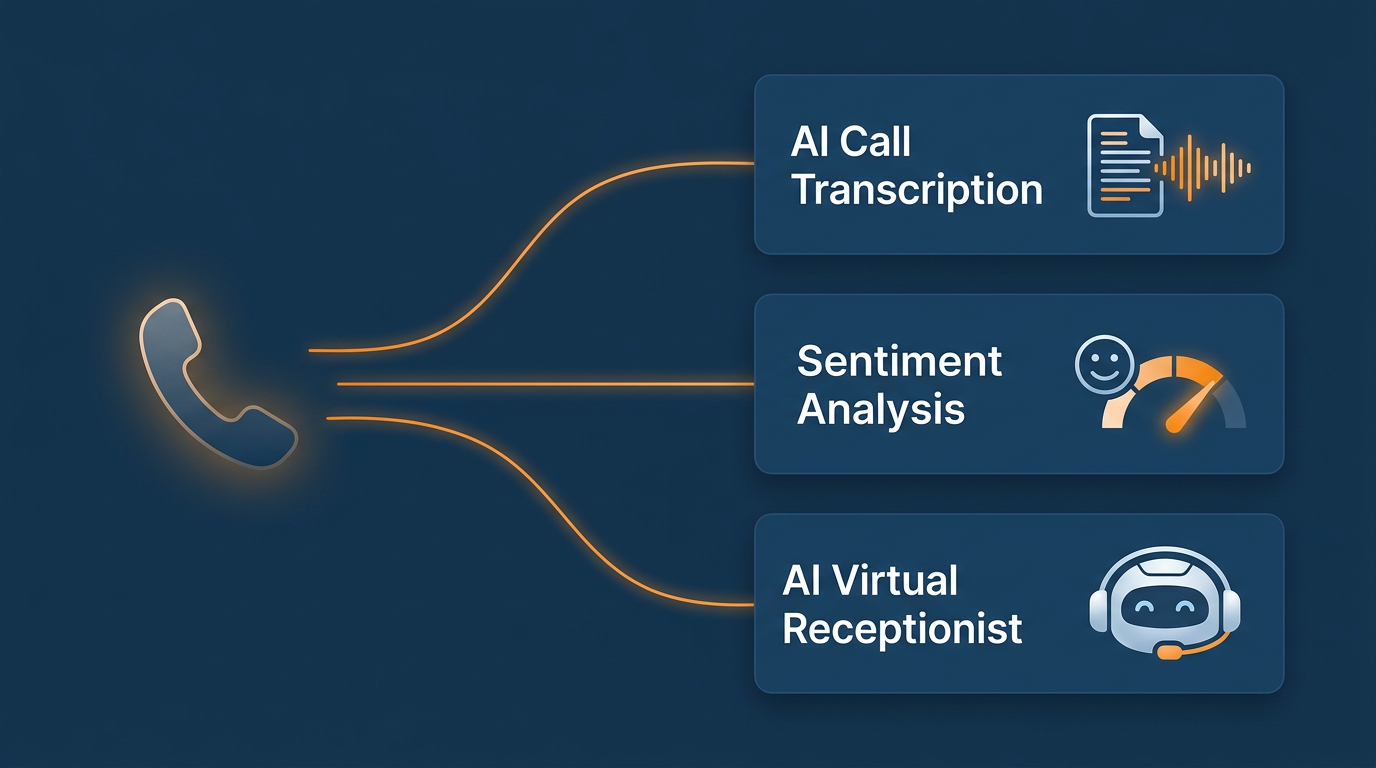
HyperCloud AI: Built-In Intelligence
Unlike other providers that charge extra for AI features, HyperCloud includes AI-powered tools as standard on all business plans:
- AI Call Transcription — every call automatically transcribed with searchable text
- Sentiment Analysis — real-time mood detection helps managers spot issues early
- AI Virtual Receptionist — intelligent call routing that learns your business patterns
- Smart Call Summary — automatic post-call summaries sent to your CRM
How do you choose the right business phone system?
With dozens of providers competing for your business, selecting the right business phone system comes down to six key factors.
How many users do you have — and how fast are you growing?
A system that works for five employees may not scale to fifty. Cloud-based platforms like Hypercloud and RingCentral make it easy to add or remove users on demand, while on-premise systems require hardware upgrades.
Think about where your business will be in three to five years, not just today.
What is your total budget?
Consider total cost of ownership, not just the monthly per-user fee. Factor in setup costs, handset purchases, call charges, number porting and any contract lock-in periods. Cloud phone systems typically have the lowest upfront costs and predictable monthly billing.
Here is a quick cost comparison for a 10-user business over 12 months:
| Provider | Monthly Cost (10 users) | Annual Cost | Setup Fee | Estimated Year 1 Total |
|---|---|---|---|---|
| Hypercloud (CT) | £89.50 | £1,074 | £0–£100 | £1,074–£1,174 |
| RingCentral (Standard) | £169.90 | £2,039 | £0 | £2,039 |
| 8×8 (X2) | £190 | £2,280 | £0 | £2,280 |
| Vonage (Premium) | £165 | £1,980 | £0 | £1,980 |
| BT Cloud Work (Standard) | £165 | £1,980 | £0 | £1,980 |
Prices based on standard/mid tiers, billed annually, excluding VAT and handsets. Verified April 2026.
Do you support remote or hybrid working?
If your team works remotely — even part of the time — your phone system must support softphones, mobile apps and browser-based calling.
Look for providers that include remote call control features as standard, so remote staff can transfer, hold and manage calls exactly as they would in the office.
Which features do you actually need?
It is tempting to chase the platform with the longest feature list, but focus on what matters for your business. Common essentials include:
- Auto-attendant — route callers to the right department automatically
- Call queues — manage incoming call volume without dropping callers
- Voicemail-to-email — never miss a message
- Call recording — essential for training, compliance and dispute resolution
- Mobile app — take your business number anywhere
- CRM integration — screen pops, click-to-call and automatic call logging
More advanced features like AI-powered transcription, sentiment analysis and wallboards may be worth paying for — or they may sit unused. Only pay for what delivers value.
How important is scalability and contract flexibility?
Choose a system that grows with you. Avoid long contracts that lock you into a specific number of licences or a fixed feature tier. The best providers — including Hypercloud — offer monthly rolling contracts so you can scale up, scale down or switch without penalty.
What level of support do you need?
For businesses without dedicated IT teams, fully managed support is essential. Check whether your provider offers UK-based phone support, response time SLAs and proactive monitoring.
With Hypercloud, Connection Technologies handles everything — from initial setup and number porting to ongoing updates and troubleshooting. You never have to manage server software or configure SIP trunks yourself.
Ready to Switch to a Modern Business Phone System?
Join 5,000+ UK businesses already using HyperCloud. Free setup, free number porting, no long-term contracts.
Get Your Free Quote
Or Call 0333 015 2615
If you want a deeper look at hosted VoIP specifically, our complete guide to hosted VoIP for business covers everything from how VoIP works to choosing a provider and getting set up.
How much does a business phone system cost in the UK?
UK business phone system costs in 2026 typically break down as follows:
| Cost Element | Typical Range | Notes |
|---|---|---|
| Monthly per-user fee | £7.50 – £25 | Depends on provider and feature tier |
| VoIP desk phone | £50 – £250 per handset | Optional — softphone/mobile app may be sufficient |
| Setup / provisioning | £0 – £200 | Many cloud providers include free setup |
| Number porting | £0 – £25 per number | Hypercloud includes free number porting |
| Call charges (UK landline) | 1p–3p/min or included | Many plans include unlimited UK calls |
| Call recording storage | Often included | Some providers charge extra — check your tier |
For a typical 10-user UK SME, expect to pay £90–£250/month for a fully featured cloud phone system including all core features.
Best value:Hypercloud starts from £15/user/month with call recording, auto-attendant and CRM integration included as standard — no add-on charges. Get an exact quote for your business
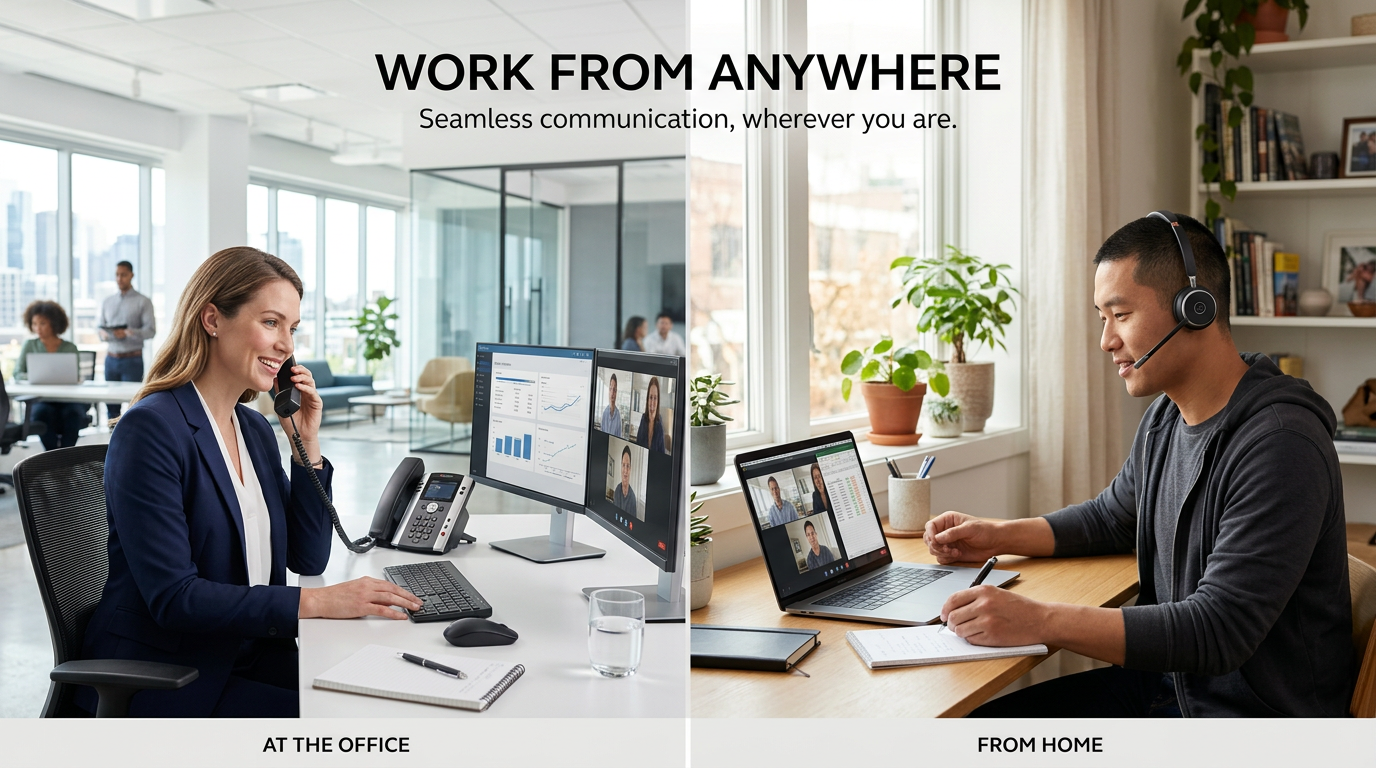
Modern business phone systems let your team work from the office, home or anywhere — same number, same features
Is a cloud phone system better than a traditional PBX?
For the vast majority of UK businesses in 2026, yes — a cloud phone system is better than a traditional PBX. Here is why:
- The PSTN switch-off in January 2027 means analogue and ISDN lines will stop working. Traditional PBX systems that rely on these lines will become unusable.
- Cloud systems cost less upfront — typically £0–£200 versus £2,000–£20,000+ for on-premise PBX hardware.
- Remote and hybrid working is fully supported with cloud systems. Traditional PBX systems offer very limited mobile or remote functionality.
- Scaling is instant — add a new user in minutes, not days.
- Maintenance is handled by the provider — no engineer call-outs, no hardware failures to manage.
The only scenario where traditional PBX still makes sense is if you have a very recent hardware investment and plan to use a hybrid migration approach before January 2027. Even then, the clock is ticking.
Our recommendation: If you are still on a traditional PBX or ISDN system, now is the time to migrate. Connection Technologies can port your existing numbers and have you live on Hypercloud within days. Start your free migration quote
What are the key features to look for in a business phone system?
When comparing business phone systems, these are the features that deliver the most value for UK companies in 2026:
| Feature | Why It Matters | Included in Hypercloud? |
|---|---|---|
| Auto-Attendant / IVR | Routes callers professionally — no receptionist needed | ✅ Yes |
| Call Queues | Holds callers in line during busy periods — reduces missed calls | ✅ Yes |
| Call Recording | Training, compliance and dispute resolution | ✅ Yes (included) |
| Mobile App | Take your business number anywhere on iOS/Android | ✅ Yes |
| Voicemail-to-Email | Receive voicemails as audio files in your inbox | ✅ Yes |
| CRM Integration | Screen pops, click-to-call, automatic call logging | ✅ Yes |
| Video Conferencing | Replace separate video tools — reduce costs | ✅ Yes |
| Call Analytics | Track call volumes, wait times, agent performance | ✅ Yes |
| Number Porting | Keep your existing business numbers when switching | ✅ Yes (free) |
| Live Chat & WhatsApp | Meet customers on their preferred channel | ✅ Yes |
Interested in HyperCloud specifically? Read our full HyperCloud guide for detailed pricing, AI features, Yealink hardware recommendations and a step-by-step migration walkthrough.
How do we test and compare business phone systems?
Our business telecoms team at Connection Technologies has been installing, configuring and supporting phone systems for UK businesses for over 20 years. Our comparison methodology includes:
- Hands-on testing — we deploy each system in a real-world UK business environment
- Call quality testing — measuring MOS (Mean Opinion Score), jitter and latency on UK broadband connections
- Feature comparison — verifying which features are included vs. paid add-ons at each price tier
- Support testing — contacting each provider’s support team and measuring response times
- Customer feedback — incorporating reviews from our own client base and independent review platforms
- Pricing verification — confirming all prices directly with providers (last verified April 2026)
This is not a theoretical comparison. We work with these systems every day and our recommendations are based on real deployment experience with UK businesses.
Official Yealink Partner
Connection Technologies is an authorised Yealink partner. We supply the full range of Yealink IP desk phones, conference phones and headsets — pre-configured and shipped directly to your team. All handsets include warranty support through our UK-based team.
Frequently asked questions about business phone systems
What is the best business phone system for a small business in the UK?
For UK small businesses with 2–50 users, Hypercloud by Connection Technologies is our top recommendation. It starts from £15/user/month, includes all core features as standard (call recording, auto-attendant, CRM integration, mobile app) and is fully managed — meaning you do not need any IT expertise. See our dedicated guide to small business phone systems.
How much does a business phone system cost per month?
UK business phone system costs range from £7.50 to £25 per user per month depending on the provider and feature tier. For a 10-user business, expect to pay £90–£250/month. Hypercloud starts from £15/user/month with no hidden fees.
Can I keep my existing phone numbers when switching?
Yes. All reputable UK VoIP providers support number porting. Connection Technologies includes free number porting with Hypercloud — we handle the entire process and your numbers are typically transferred within 5–10 working days.
What happens when the PSTN switches off in 2027?
All analogue and ISDN phone lines in the UK will stop working in January 2027. Any business still using a traditional PBX or analogue lines will need to switch to a VoIP-based system. If you have not migrated yet, we strongly recommend starting the process now. Get a free migration quote
Do I need special equipment for a cloud phone system?
No. You can use a cloud phone system with just a laptop or smartphone and a headset. If you prefer desk phones, VoIP handsets start from around £50. The only requirement is a reliable broadband connection — we recommend a minimum of 100 Kbps upload speed per concurrent call.
What is the difference between VoIP and a cloud phone system?
VoIP (Voice over Internet Protocol) is the technology — it means making calls over the internet. A cloud phone system is a specific deployment model that uses VoIP technology but hosts everything in the provider’s cloud, so you do not need any on-site servers. All cloud phone systems use VoIP, but not all VoIP systems are cloud-hosted.
Is a cloud phone system secure?
Yes, when properly configured. Leading providers use TLS and SRTP encryption, multi-factor authentication and data centre security certifications (ISO 27001, SOC 2). Hypercloud uses encrypted connections as standard and Connection Technologies manages all security updates. Read our guide on cloud telephony security.
What is the best VoIP phone system for a small business in the UK?
The best VoIP phone system for a small business depends on your specific needs, but the key features to look for are reliability, ease of use, scalability, and value for money.
What makes a good small business phone system:
- Low upfront costs – hosted VoIP systems require minimal investment, often just the cost of IP handsets or even free softphone apps
- Pay-per-user pricing – most hosted VoIP providers charge a simple monthly fee per user, making costs predictable and scalable
- Professional features – auto attendant, call queues, voicemail-to-email, and hunt groups help small teams sound professional
- Mobile integration – staff can use their business number on mobile apps when working remotely or on the go
- Easy management – web-based portals let you manage users, call routing, and settings without needing an IT department
Typical costs for small business VoIP in the UK:
- Hosted VoIP: from £8–15 per user per month
- IP desk phones: from £50–150 per handset (one-off)
- Inclusive UK calls: usually included in the monthly fee
As an independent provider, Connection Technologies compares packages from multiple hosted telephony suppliers to find the best deal for your business. Get a free comparison quote – it takes less than a minute.
How do I choose the best VoIP provider in the UK for my business?
Choosing the right VoIP provider is critical for your business communications. With dozens of VoIP providers in the UK, here is what to look for:
Key factors when comparing UK VoIP providers:
- Call quality and reliability – look for providers using Tier 1 UK data centres with guaranteed uptime SLAs of 99.9% or higher
- Feature set – ensure the package includes the features you need: auto attendant, call recording, call queues, voicemail-to-email, mobile apps, and CRM integration
- Scalability – can you easily add or remove users as your business changes?
- UK-based support – when something goes wrong, you want to speak to a real person in the UK, not navigate an overseas call centre
- Contract flexibility – avoid being locked into long contracts. Look for monthly rolling or short-term agreements
- Number porting – confirm the provider can port your existing business numbers at no extra cost
- Transparent pricing – watch out for hidden fees for features, support, or call minutes that should be included
Why use an independent provider like Connection Technologies?
Rather than being tied to a single network, we compare hosted VoIP solutions from multiple leading UK providers to find the best fit for your business. This means you get unbiased advice, competitive pricing, and a single point of contact for ongoing support.
Get a free VoIP comparison quote and let us do the hard work for you.
What is a hosted phone system and how does hosted VoIP differ from on-premise?
A hosted phone system (also called hosted VoIP or hosted PBX) is a cloud-based business telephone system where all the call-handling technology is managed in secure data centres rather than on your premises.
With a traditional on-premise PBX, you need expensive hardware installed in your office, ongoing maintenance contracts, and specialist engineers for any changes. A hosted phone system eliminates all of that – your provider manages the infrastructure, software updates, and security, while you simply connect IP phones or softphones to your internet connection.
Hosted VoIP vs on-premise PBX:
- Upfront cost – Hosted: minimal (phones only). On-premise: thousands for PBX hardware
- Maintenance – Hosted: included by your provider. On-premise: your responsibility
- Scalability – Hosted: add/remove users instantly. On-premise: may need new hardware
- Remote working – Hosted: built-in. On-premise: requires additional configuration
- Disaster recovery – Hosted: automatic failover. On-premise: single point of failure
- Updates – Hosted: automatic. On-premise: manual and often costly
For most UK businesses, a hosted phone system offers better value, greater flexibility, and future-proof technology. Compare hosted VoIP packages with Connection Technologies.
What is a PBX phone system and should I choose hosted PBX or on-premise?
A PBX (Private Branch Exchange) is a business telephone system that manages internal and external calls for an organisation. It handles call routing, extensions, voicemail, call transfer, and other telephony features.
Types of PBX systems:
- Traditional PBX – physical hardware installed on your premises, connected to PSTN/ISDN lines. Being phased out with the PSTN switch-off
- IP PBX – on-premise hardware that uses VoIP (internet) for calls instead of traditional lines
- Hosted PBX (Cloud PBX) – the PBX runs in the cloud, managed by your provider. No hardware on your premises beyond IP phones
Hosted PBX vs on-premise PBX comparison:
- Capital expenditure – Hosted: none. On-premise: £2,000–20,000+ depending on size
- Monthly cost – Hosted: £8–20 per user. On-premise: maintenance contracts + line rental + call charges
- IT resource required – Hosted: none. On-premise: specialist knowledge or outsourced support
- Remote working – Hosted: native support. On-premise: requires VPN and additional configuration
- Disaster recovery – Hosted: built-in. On-premise: your responsibility
- Lifespan – Hosted: always current. On-premise: hardware typically needs replacing every 7–10 years
For the vast majority of UK businesses, hosted PBX offers the best combination of features, flexibility, and value. Compare hosted PBX packages with Connection Technologies.
Get a free business phone system quote
Choosing the right business phone system does not have to be complicated. Whether you need a simple setup for 5 users or a feature-rich platform for 200+, Connection Technologies can help you find the right solution at the right price.
Get Your Free Quote
Tell us your requirements and get a personalised, no-obligation quote within 24 hours.
- Free number porting from your existing provider
- Fully managed setup — we handle everything
- No long-term contracts — monthly rolling available
- UK-based support team (phone, email, live chat)
- Prices from £15/user/month
Want a cloud phone system built for UK SMEs?
Hypercloud includes auto attendant, call recording, mobile app and full UK support from £15/user. See our hosted VoIP phone system →
Related Reading
- Hunt Groups, Ring Groups & Call Queues for UK Business Phone Systems (2026)
- Best Cloud Phone System UK 2026: Setup, Costs & Provider Comparison
- Office Phone Systems UK 2026: Types, Costs & How to Choose
- Business Phone Systems & Cloud Solutions UK 2026
- What Features Should I Look for in a Business Phone System?
- How to Choose a Business Phone System in the UK
- Are Cloud Phone Systems Worth It for Small UK Businesses?
- Business Phone System Pricing UK 2026: What to Budget
- Call Forwarding Phone Systems UK 2026: Auto-Attendant, Hunt Groups & Smart Routing
Updated: April 2026 | Reviewed by: Connection Technologies business telecoms team | Systems tested: 7 | Next review: July 2026
Already have an on-premise PBX? SIP trunking lets you keep your existing phone system while cutting call costs by up to 50% — from just £3/channel/month.
Related Guides
Considering virtual numbers for your business? Read our complete Virtual Phone Numbers Guide →
Related Reading
More from the Connection Technologies blog.