


Last updated: March 2026 | Reviewed by: Connection Technologies business telecoms team
Choosing the right small business phone system can feel overwhelming — dozens of providers, confusing pricing tiers, and jargon that would make anyone’s head spin.
But getting it right matters: your phone system shapes how customers perceive you, how efficiently your team works, and how smoothly you scale.
How many phone lines does your business need?
Get a free no-obligation quote in 60 seconds
When does your current contract expire?
Tell us about your business
Your details
We'll never share your details. Unsubscribe anytime.
Thank you!
One of our mobile experts will be in touch shortly with your tailored quote.















This guide cuts through the noise. We compare every major option available to UK small businesses in 2026, break down real costs, and help you pick the system that fits your team — whether you’re a sole trader or a growing SME with 50 staff.
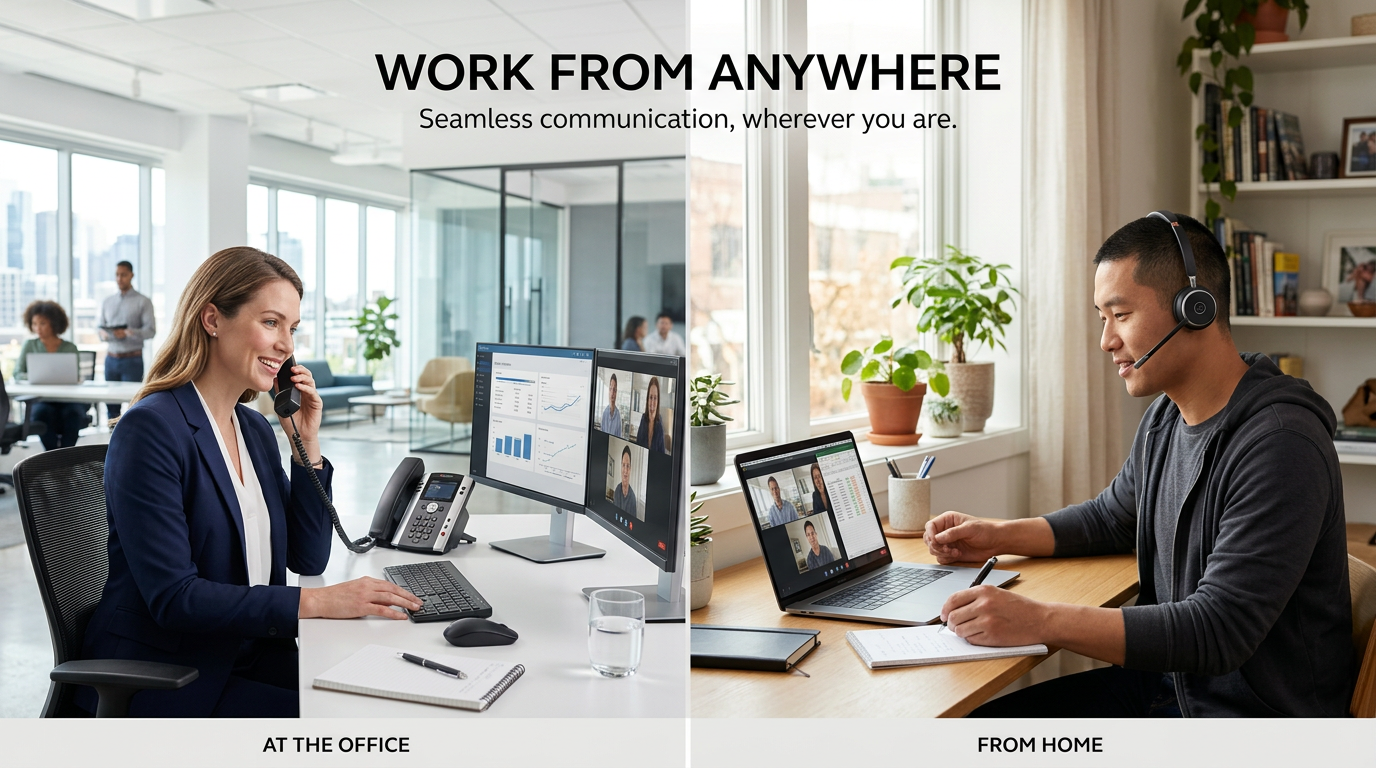
Modern small business phone systems let your team work from office or home — same number, same features
Why Your Small Business Needs a Proper Phone System
A mobile phone might have got you started, but relying on personal devices long-term costs you credibility, calls, and customers. Here’s why upgrading to a dedicated small business phone system is one of the smartest investments you’ll make.
Project a Professional Image From Day One
When a customer calls and hears a professional greeting, an auto attendant, or hold music instead of a voicemail box, they trust you more.
A proper telephone system for small business gives even a one-person operation the polish of a much larger company — with features like custom greetings, department routing, and local or national numbers.
Never Miss a Call Again
Missed calls are missed revenue. With a modern phone system for small business, calls can ring on your desk phone, your laptop, and your mobile simultaneously. If you’re busy, calls route to a colleague or drop into voicemail-to-email.
No more “sorry, I was in a meeting” — every enquiry gets captured.
Build a System That Grows With You
Hiring two new staff next month? Opening a second location next year? A scalable small business phone system lets you add users in minutes, not weeks. Cloud-based systems in particular mean zero hardware upgrades and no engineer visits — just log in and add a seat.
Types of Phone Systems for Small Business
Hypercloud Contact Centre
Small team, big call volumes? Hypercloud Contact Centre starts at three agents and grows with you. Explore Hypercloud Contact Centre →
Before comparing providers, you need to understand the four main types of phone systems for small business available in the UK today. Each has distinct advantages depending on your budget, team size, and technical requirements.
Traditional Landline (PBX)
The legacy option. Traditional PBX systems use copper phone lines and on-premise hardware to route calls. They’ve been the backbone of UK business telephony for decades, but with the PSTN switch-off approaching in 2027, they’re rapidly becoming obsolete.
Installation is expensive, maintenance requires engineers, and adding lines means physical wiring.
VoIP (Voice over Internet Protocol)
VoIP sends voice calls over your internet connection instead of traditional phone lines. It’s the technology underpinning most modern small business telephone systems, delivering significant cost savings and far greater flexibility.
If you have reliable broadband, VoIP is almost certainly the right foundation for your system.
Cloud-Based (Hosted VoIP)
Cloud-based phone systems take VoIP a step further — all the infrastructure is managed by your provider in secure data centres. There’s nothing to install on-site beyond phones or softphone apps.
This is the fastest-growing category of small company phone systems in the UK, and for good reason: zero maintenance, automatic updates, and access from anywhere. Learn more in our guide to cloud phone systems.
Hybrid Systems
Some businesses — particularly those with existing PBX hardware — opt for hybrid systems that blend traditional lines with VoIP. This can be a sensible transitional step, but long-term, most businesses are moving fully to cloud. Hybrid adds complexity and cost that pure cloud avoids.
| System Type | Upfront Cost | Monthly Cost | Scalability | Maintenance | Future-Proof |
|---|---|---|---|---|---|
| Traditional PBX | High (£2,000+) | Low–Medium | Poor | Engineer needed | No (PSTN ending 2027) |
| VoIP (On-Premise) | Medium (£500–£2,000) | Low | Good | In-house IT | Yes |
| Cloud / Hosted VoIP | None–Low | £8–£25/user | Excellent | Provider-managed | Yes |
| Hybrid | Medium | Medium | Moderate | Mixed | Partial |
What You Get With HyperCloud
Everything a small business needs — enterprise features without the enterprise price tag.

Yealink Desk Phones
HD audio, colour touchscreen, PoE powered. Pre-configured and shipped to your door. We’re an official Yealink partner.
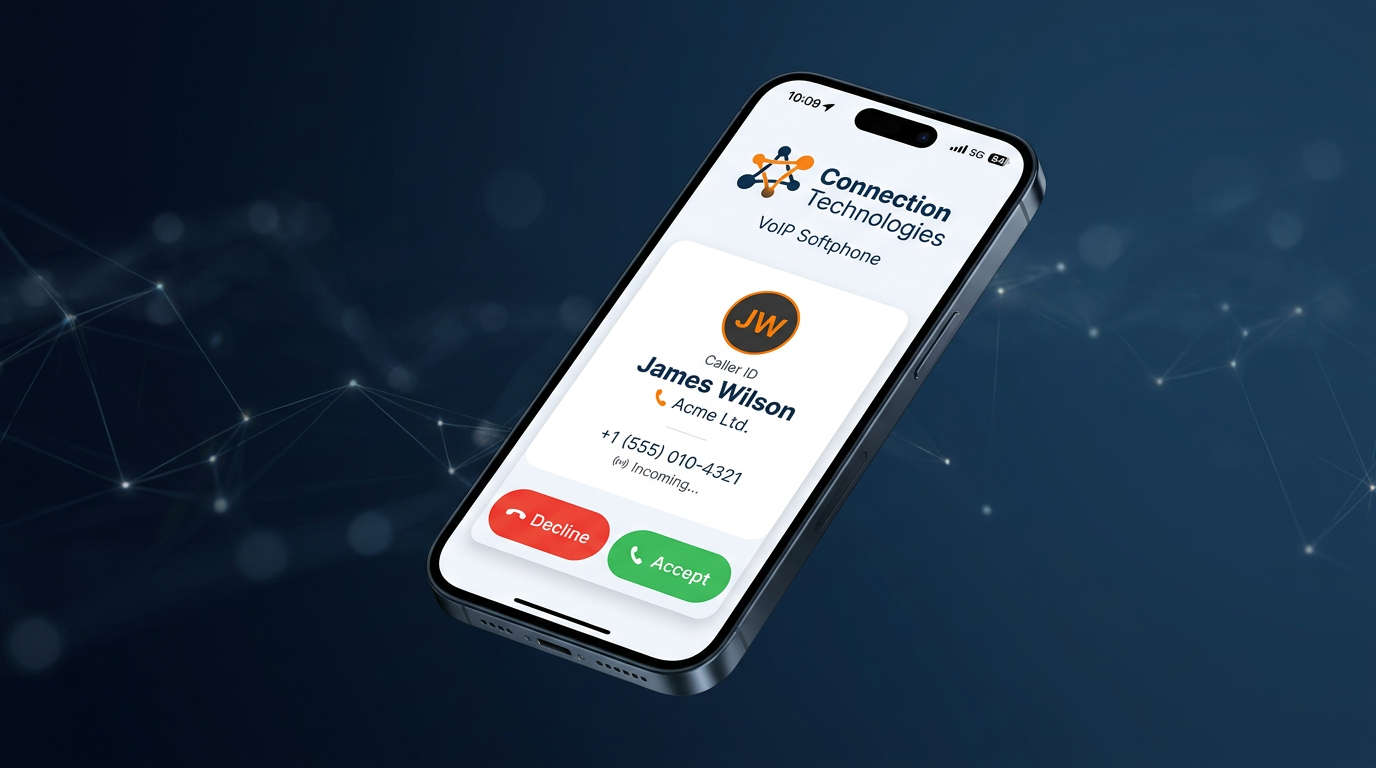
HyperCloud Mobile App
Your office number on your mobile. Make and receive business calls from anywhere — perfect for working from home or on the road.
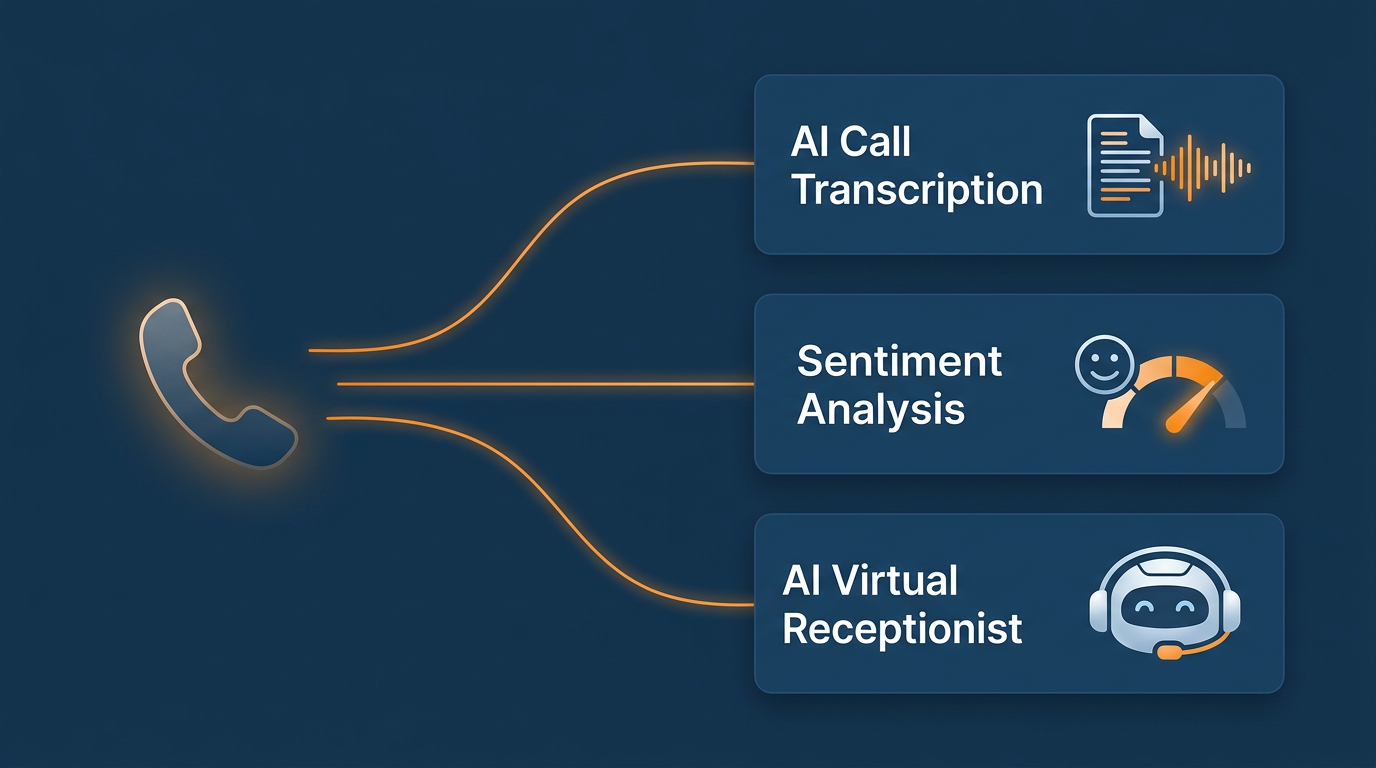
AI Call Intelligence
AI call transcription, sentiment analysis and smart routing — included as standard, not a paid add-on.
Best Small Business Phone Systems UK 2026
We’ve evaluated the leading small business phone systems available in the UK right now. Here’s how the top providers compare across pricing, features, support, and suitability for different business sizes.
Hypercloud by Connection Technologies
Hypercloud is Connection Technologies’ own hosted VoIP platform, purpose-built for UK small businesses. It combines enterprise-grade features — auto attendant, call recording, CRM integration, mobile apps — with genuinely personal support from a UK-based team.
Unlike the big-box providers, you get a dedicated account manager who knows your setup inside out. Pricing starts from just £8.50 per user/month with no long contracts, making it one of the most cost-effective options on the market.
3CX
3CX is popular with businesses that want more control over their system. It offers a self-hosted or cloud-hosted PBX with strong video conferencing and live chat features.
The free tier covers up to 10 users, which appeals to startups, though you’ll need technical know-how (or a partner like Connection Technologies) to get the most from it.
RingCentral
A global UCaaS giant with a strong feature set including messaging, video, and phone. RingCentral suits businesses that need heavy integrations with tools like Salesforce and Microsoft Teams.
However, pricing is higher than UK-focused alternatives and support can feel impersonal at the small business level.
8×8
8×8 offers unlimited international calling to up to 48 countries, making it a solid pick for businesses with overseas clients. The platform is feature-rich but the interface can feel complex, and smaller teams may find they’re paying for capabilities they don’t need.
BT Business
BT’s brand recognition is strong, but their small business phone systems tend to be more expensive with less flexibility than specialist VoIP providers.
They’re a safe choice if you want everything under one roof (broadband + phones), but you’ll typically get better value and more tailored service elsewhere. See our business phone line guide for a deeper comparison.
GoTo Connect
Formerly Jive, GoTo Connect delivers a clean interface with solid call management features. It integrates well with the GoTo ecosystem (GoTo Meeting, GoTo Webinar) and offers competitive mid-range pricing. Best for teams already using GoTo products.
| Provider | Price From | Min Users | Best For | UK Support | Key Feature |
|---|---|---|---|---|---|
| Hypercloud (CT) | £15/user/mo | 1 | UK SMEs wanting value + support | Yes — dedicated | Personal account management |
| 3CX | Free (10 users) | 1 | Tech-savvy teams | Partner-dependent | Self-hosted flexibility |
| RingCentral | £12.99/user/mo | 1 | Enterprise integrations | Yes — tiered | App ecosystem |
| 8×8 | £11/user/mo | 1 | International calling | Yes | Unlimited global calls |
| BT Business | £15/user/mo | 1 | Brand trust + bundling | Yes | BT broadband bundle |
| GoTo Connect | £10/user/mo | 1 | GoTo ecosystem users | Limited | GoTo suite integration |
For a broader comparison including enterprise options, see our complete guide to the best business phone systems in the UK.
Looking for the right phone system for your small business?
Tell us your team size and needs — we’ll recommend the best system and price it up for free.
How Much Does a Small Business Phone System Cost?
Cost is usually the first question — and rightly so. The good news: modern cloud-based phone systems for small business are dramatically cheaper than the traditional PBX setups they replace. Here’s what you should budget in 2026.
Monthly Per-User Pricing
| Tier | Price Per User/Month | Typical Features | Best For |
|---|---|---|---|
| Basic | £8–£12 | Calls, voicemail, mobile app, basic routing | Sole traders, micro businesses |
| Standard | £12–£18 | Auto attendant, call recording, CRM integration | Small teams (5–20 users) |
| Premium | £18–£30 | Analytics, wallboards, advanced integrations, SLAs | Growing SMEs (20–50 users) |
Hardware Costs
If you want physical desk phones, budget £60–£150 per handset for a quality IP phone (Yealink and Poly are popular choices). However, many small businesses skip hardware entirely and use softphone apps on laptops and mobiles — cutting upfront costs to virtually zero.
Headsets typically run £30–£80 each.
Total Cost of Ownership: Cloud vs Traditional
For a 10-person team over three years, here’s a realistic comparison:
- Traditional PBX: £2,500 upfront hardware + £150/month line rental + maintenance = roughly £8,900 over 3 years
- Cloud VoIP (e.g., Hypercloud): £0 upfront + £150/month (at £15/user) = roughly £5,400 over 3 years
That’s roughly 40% savings with cloud — before you factor in the productivity gains from features like mobile apps, call recording, and remote call control.
Choosing the Right System for Your Team Size
There’s no one-size-fits-all small business phone system. What works for a freelance consultant won’t suit a 30-person sales team. Here’s our recommendation by team size.
Sole Traders & Micro Businesses (1–5 Users)
You need simplicity, low cost, and professionalism. A cloud-based system with a mobile app, voicemail-to-email, and an auto attendant is the sweet spot. You probably don’t need desk phones — a softphone on your laptop or mobile does the job.
Our pick:Hypercloud Standard at £15/user/month. One number across all devices, professional greetings, and a mobile app that works brilliantly.
Small Teams (5–20 Users)
At this size, call management becomes critical. You need call queues, transfer capabilities, an auto attendant with department routing, and probably call recording for training or compliance. CRM integration starts to pay dividends here too — no more manually logging calls.
Our pick: Hypercloud Standard or 3CX (partner-managed). Both deliver excellent value with the features growing teams actually use. The key difference is support: Hypercloud gives you a dedicated UK account manager; 3CX relies on your IT skills or a managed partner.
Growing SMEs (20–50 Users)
You’re beyond “small” in terms of complexity. You need analytics and wallboards so managers can monitor call volumes in real time, advanced IVR menus, integration with your CRM and helpdesk, and an SLA-backed support agreement.
Reliability is non-negotiable — downtime at this scale costs real money.
Our pick: Hypercloud Premium or RingCentral. If you want UK-based dedicated support and competitive pricing, Hypercloud wins. If you need deep integration with enterprise tools like Salesforce, RingCentral is worth the premium.
Essential Features for Small Business Phone Systems
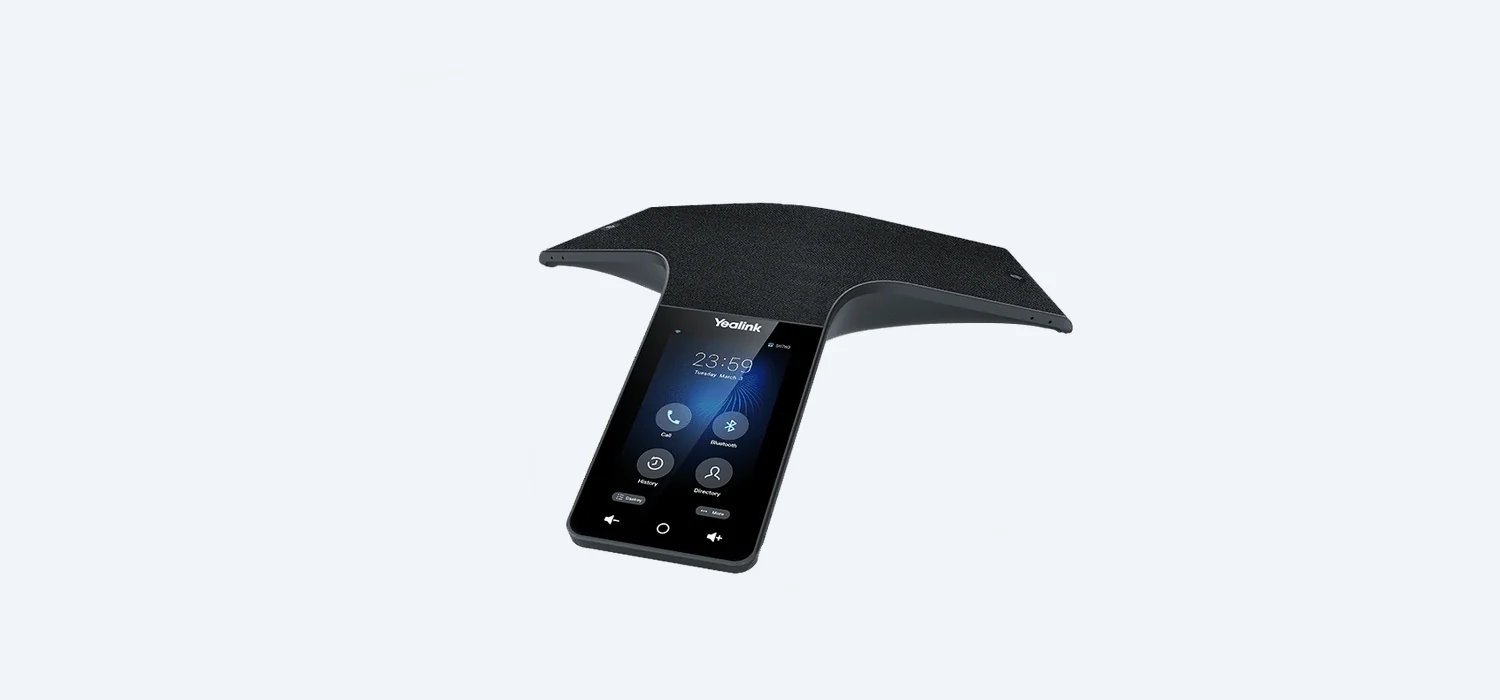
Yealink CP965 conference phone: 360° microphone pickup and noise-proof audio for team meetings and client calls
Not all features are created equal. These are the ones that genuinely make a difference for UK small businesses — the capabilities you’ll actually use daily rather than bullet points that look good on a spec sheet.
Auto Attendant
Your virtual receptionist. An auto attendant greets callers and routes them to the right person or department without human intervention. Even a one-person business benefits — “Press 1 for sales, press 2 for support” makes you sound established.
Call Forwarding & Simultaneous Ring
Ensure calls reach you wherever you are. Modern small business phone systems ring your desk phone, mobile, and laptop simultaneously, or follow rules you set — ring the office first, then mobile after 15 seconds, then voicemail.
Voicemail to Email
Every voicemail lands in your inbox as an audio file (and often a transcription). You can triage messages without dialling in, reply faster, and never lose a message buried in a voicemail box you forgot to check.
Mobile App
A must-have in 2026. The mobile app lets you make and receive calls on your business number from your personal phone — keeping your private number private and your business accessible everywhere. Essential for remote and hybrid teams.
Call Recording
Call recording is invaluable for training, dispute resolution, and compliance (particularly in regulated industries). Most cloud systems include it as standard or as an affordable add-on.
CRM Integration
When your phone system talks to your CRM, every call is logged automatically. Screen pops show customer details before you answer. Click-to-call from contact records saves time. If your team handles more than a handful of calls per day, this feature pays for itself.
Video Conferencing
Many modern telephone systems for small business now include built-in video meetings, reducing the need for separate Zoom or Teams subscriptions. Ideal for client presentations, team catch-ups, and remote collaboration.
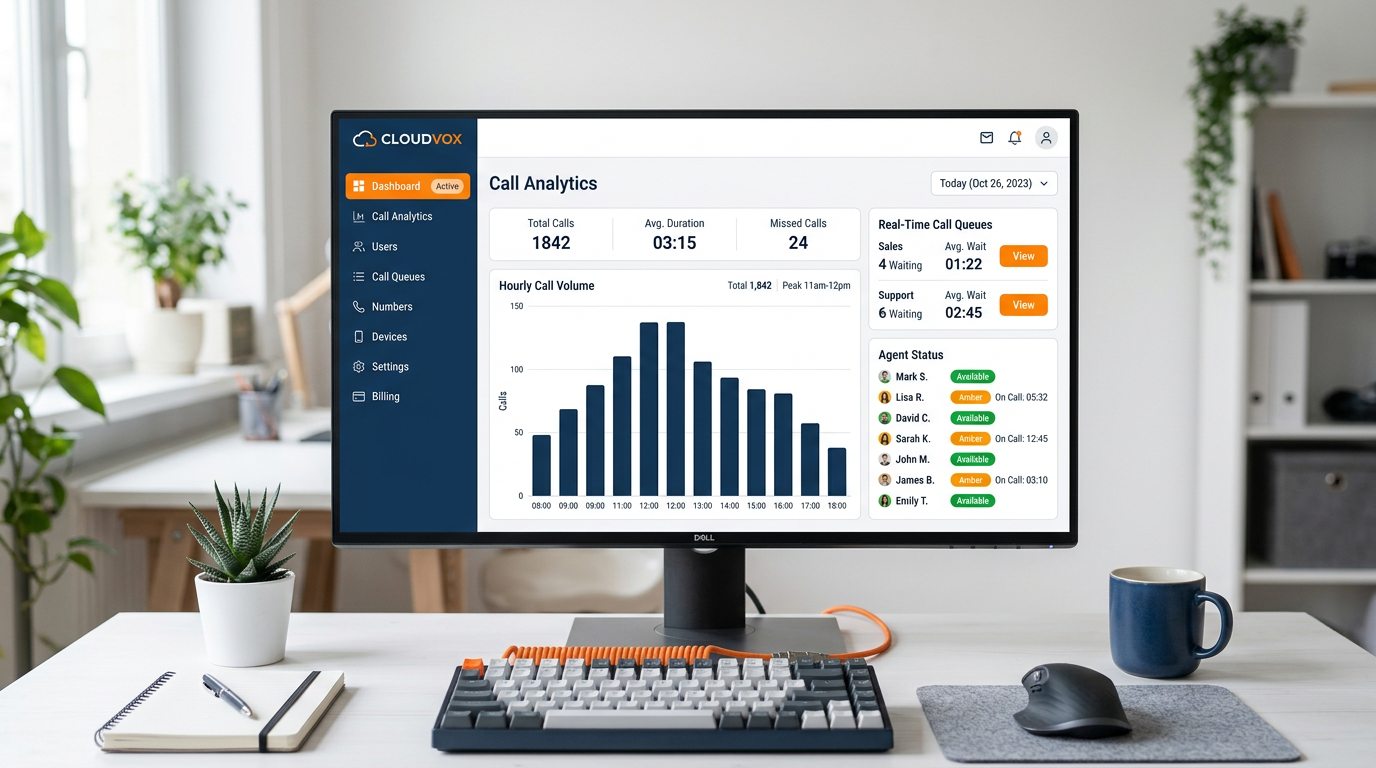
HyperCloud dashboard: real-time call analytics, agent status and queue management at a glance
VoIP Phone Systems for Small Business
If you’ve been researching phone systems for small business, you’ll have noticed VoIP dominating every recommendation. Here’s why — and why 2026 is the year to make the switch if you haven’t already.
Why VoIP Is Ideal for SMEs
A VoIP phone system for small business converts your voice into data packets and sends them over your internet connection.
The result: dramatically lower call costs (especially for international calls), vastly more features than traditional lines, and the flexibility to work from anywhere with an internet connection.
For UK small businesses specifically, VoIP eliminates the per-line charges that made traditional telephony so expensive. Instead of paying for physical lines plus call charges, you pay a flat per-user fee that typically includes unlimited UK calls.
The PSTN Switch-Off: Why 2027 Changes Everything
BT is switching off the traditional PSTN and ISDN networks by 2027. Every business in the UK will need to move to a VoIP-based system — it’s not optional. If you’re still on traditional lines, the clock is ticking.
Moving now means you choose your provider on your terms rather than scrambling at the deadline. Read our detailed VoIP vs landline comparison for the full picture.
Cost Savings in Real Numbers
Typical savings when moving from traditional to VoIP:
- Line rental: Eliminated entirely — VoIP uses your existing broadband
- Call costs: 40–60% reduction on average, with many plans including unlimited UK calls
- Maintenance: No on-site PBX to service — saves £500–£1,500/year in engineer visits
- Hardware: Optional — softphones mean zero desk phone costs if preferred
- International calls: Up to 80% cheaper than traditional rates
For a detailed look at hosted VoIP benefits, visit our hosted VoIP for business guide.
See also: what is SoGEA.
Office Phone Systems for Small Business
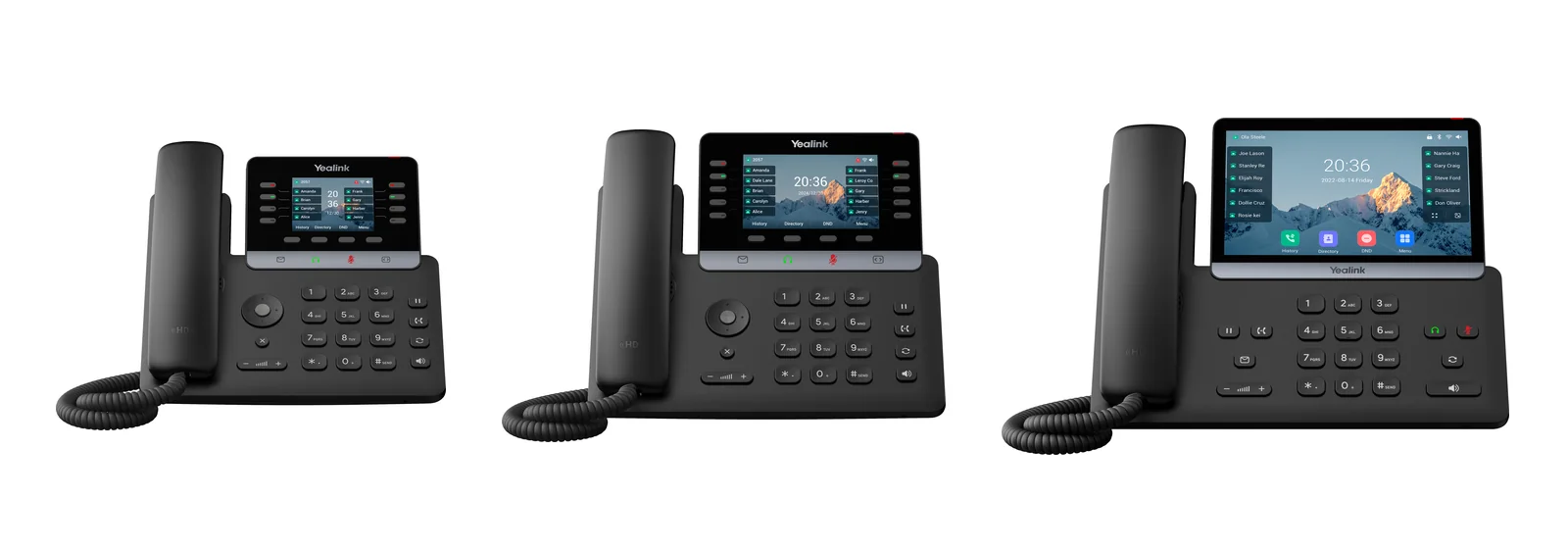
Yealink IP desk phones: from the entry-level T73U (from about £60) to the T77U with 7-inch colour touchscreen (from about £130)
While remote work has reshaped telephony, plenty of UK small businesses still operate from offices, shops, clinics, and warehouses. If you’re setting up office phone systems for small business premises, here are the practical considerations.
Desk Phones vs Softphones
You don’t have to choose one or the other — most systems support both. But here’s a quick guide:
- Desk phones are ideal for reception desks, call-heavy roles, and shared spaces where multiple people use one station. A quality IP desk phone (like the Yealink T74W) costs around £90–£110 and provides tactile call handling that some users prefer.
- Softphones are apps installed on laptops or desktops. They’re free, zero-maintenance, and perfect for knowledge workers, hybrid teams, and anyone who primarily uses a computer. Pair with a good headset (£40–£80) for clear audio.
Most small company phone systems let you mix and match — desk phones in reception, softphones for the rest of the team.
Internet & Wi-Fi Requirements
VoIP needs reliable internet, but it’s not as demanding as people fear. Each concurrent call uses roughly 100 Kbps. A standard business broadband connection (50–80 Mbps) comfortably handles 20+ simultaneous calls. The key factors:
- Bandwidth: 100 Kbps per concurrent call (up and down)
- Latency: Under 150ms for clear audio
- Jitter: Under 30ms to avoid choppy calls
- QoS: Your router should prioritise voice traffic — most business routers support this
If your current broadband is unreliable, fix that first. The best phone system for small business in the world won’t help if your internet drops out every afternoon.
Not Sure Which System Fits Your Small Business?
Tell us your team size and we’ll recommend the best system at the best price. Free, no-obligation, takes 60 seconds.
How to Set Up a Small Business Phone System
Setting up a modern cloud-based small business phone system is far simpler than you might expect. Here’s the step-by-step process.
Step 1: Audit Your Needs
Count your users, map your call flow (who answers, where calls route), identify must-have features, and note any existing numbers you need to keep. Write down your peak concurrent call volume — this determines your bandwidth needs.
Step 2: Choose Your System Type
For 90% of UK small businesses in 2026, the answer is cloud-based VoIP. It’s the most cost-effective, flexible, and future-proof option. Only consider on-premise if you have specific compliance requirements or existing hardware you need to amortise.
Step 3: Pick Your Provider
Compare at least three providers. Look beyond headline pricing — check contract length, included minutes, support quality, and uptime SLAs. Request demos and ask about onboarding support. A provider who helps you set up properly saves weeks of frustration.
Step 4: Port Your Numbers
Moving your existing business numbers to your new provider takes 5–15 working days in the UK. Your provider handles the process, but start it early — customers should always be able to reach you on the numbers they know.
Step 5: Install & Configure
With cloud systems, “installation” often means plugging in desk phones (if using them) and downloading apps. Your provider should configure your call routing, auto attendant, voicemail boxes, and user permissions.
Good providers like Connection Technologies do this for you as part of onboarding.
Step 6: Train Your Team
Don’t skip this. Even the most intuitive system needs a 30-minute walkthrough — how to transfer calls, use the mobile app, access voicemail, and join conference calls. A quick training session prevents weeks of “how do I…?” questions.
Looking for the right phone system for your small business?
Tell us your team size and needs — we’ll recommend the best system and price it up for free.
Telephone Systems for Small Business UK: Common Mistakes
After helping hundreds of UK small businesses choose and implement telephone systems for small business, we see the same mistakes repeated. Avoid these and you’ll save money, time, and frustration.
Overbuying Features You’ll Never Use
Enterprise-grade analytics, AI-powered sentiment analysis, and 200-participant video conferencing sound impressive — but if you’re a 10-person plumbing company, you’re paying for features that will never leave the box. Start with what you need now.
Good providers let you upgrade features without changing system.
Ignoring Internet Speed and Reliability
The most common cause of poor VoIP call quality isn’t the phone system — it’s the broadband. Before signing up, run a VoIP-specific speed test during peak hours. If your connection struggles, invest in a business-grade broadband upgrade first.
It’s far cheaper than dealing with dropped calls and frustrated customers.
Not Planning for Growth
You’ve got 8 staff today, but what about next year? Choosing a system that caps at 10 users or charges punitive rates above a threshold will cost you later. Pick a provider with transparent, linear scaling — where adding user 11 costs exactly the same as user 5.
Assuming Cheapest Is Best
A £5/user/month system with no support, 99% uptime (that’s nearly 4 days of downtime per year), and a clunky app will cost you far more in lost productivity and missed calls than a £12/user system that works flawlessly with dedicated support. Value, not price, should drive your decision.
Frequently Asked Questions
For most UK small businesses in 2026, a cloud-based VoIP system offers the best combination of cost, features, and flexibility.
Hypercloud by Connection Technologies is our top recommendation for businesses wanting competitive pricing, enterprise features, and dedicated UK support — but the best system depends on your specific needs, team size, and budget.
Cloud-based small business phone systems typically cost between £8 and £25 per user per month in the UK. A 10-person team should budget £100–£200/month for a full-featured system.
Traditional PBX systems cost more when you factor in line rental, maintenance, and hardware depreciation.
Yes. Number porting is standard practice and your new provider handles the process. It typically takes 5–15 working days for UK numbers. During the transition, your provider can set up temporary call forwarding so you never miss a call.
No. You can run a VoIP phone system for small business entirely on existing computers and smartphones using softphone apps. If you prefer physical desk phones, IP handsets cost £60–£150 each. The only essential requirement is a reliable broadband connection.
Good cloud phone systems include failover options. Calls can automatically redirect to mobile numbers, a backup broadband connection, or voicemail. Some providers offer 4G backup dongles for critical environments. Discuss disaster recovery with your provider during setup.
Absolutely. Leading VoIP providers deliver 99.99% uptime — that’s less than 53 minutes of downtime per year. With a reliable business broadband connection and proper QoS configuration, call quality equals or exceeds traditional landlines.
The entire UK is moving to VoIP ahead of the 2027 PSTN switch-off, so reliability is proven at scale.
Next Steps: Finding Your Perfect Small Business Phone System
The right small business phone system makes your team more productive, your customers happier, and your business more professional — all while costing less than the legacy setup it replaces.
See also our guide on Internet and Phone System for Small Business — Setup Guide 2026 for more details.
Here’s what to do now:
- If you’re exploring options: Read our complete guide to business phone systems for the full market overview.
- If you’re comparing VoIP providers: Our hosted VoIP guide digs deeper into the technology.
- If you’re ready to move:Get a free, no-obligation quote tailored to your team size and requirements. We’ll recommend the right system, walk you through pricing, and handle everything from number porting to training.
- VoIP Phone System for Small Business
- Cheap Business Phone Line UK 2026
n
n
Every month you stay on an outdated system is a month of higher costs, missed calls, and lost professionalism. The switch takes days, not weeks — and the ROI starts from month one.
Related VoIP & Phone Guides
Related Reading
More from the Connection Technologies blog.