

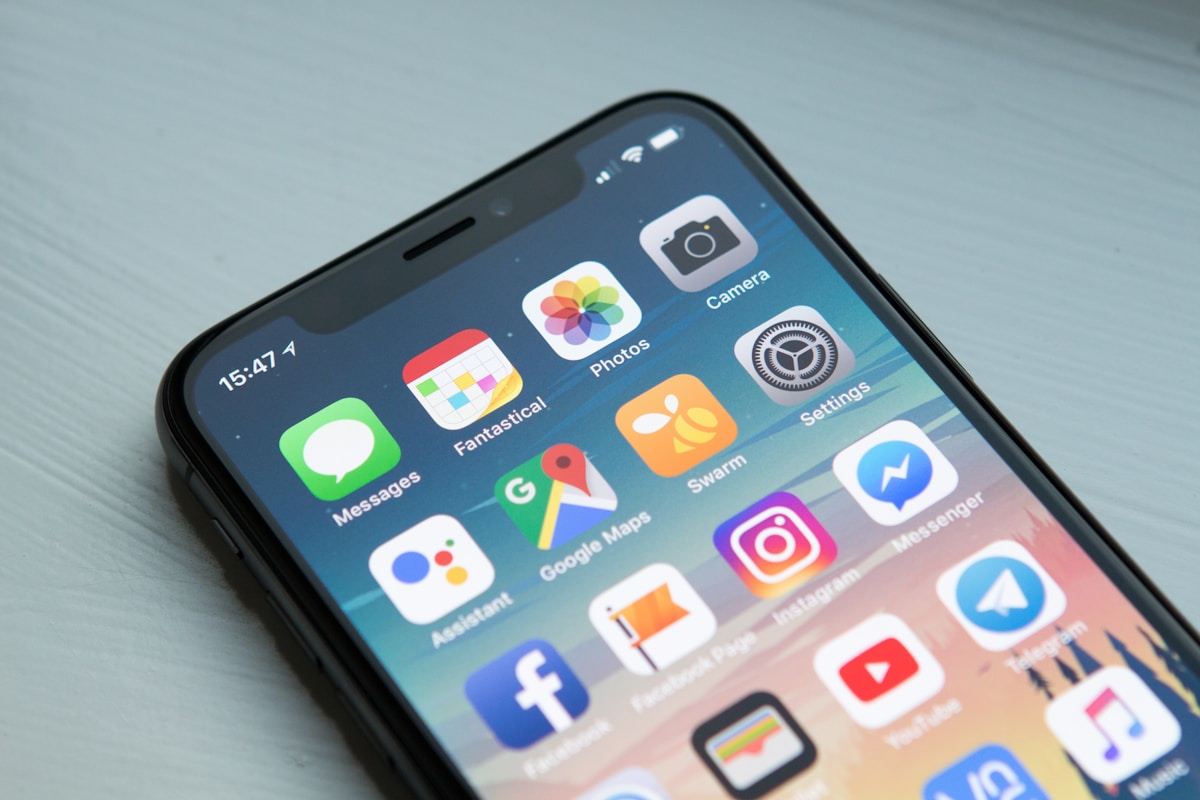
Call divert on iPhone is one of those features that sounds simple until you actually need it — especially in a UK business context where you might want every call forwarded when you’re abroad, only the missed ones sent to a colleague, or your business mobile redirected to a desk phone when you’re in a meeting. This guide covers every divert scenario, every UK network, both the Settings menu and the GSM MMI codes (so you can do it without signal too), and the point at which iPhone diverts stop being enough and you should move to a proper hosted VoIP system instead.
Everything below is verified against iOS 18, iOS 26 and iOS 27 on iPhone 11, 13, 14, 15, 16, 17 and the iPhone 18 line, and against current UK operator support pages as of 2026.
What is call divert on iPhone and how does it actually work?
Standard: The MMI divert codes used here are defined in ETSI TS 122 030 — they’re the international GSM standard, not an Apple-specific feature.
Looking for Android, landline or business call forwarding? This guide is iPhone-focused. For the all-network walkthrough including Android setup, BT/landline divert codes and VoIP business options, see our complete UK call forwarding guide.
Call divert (also called call forwarding) tells the mobile network to redirect incoming calls to another number before they reach your handset. The forwarding happens at the operator’s switch, not on your iPhone — which is why divert still works if your iPhone is switched off, out of signal, or has a flat battery.
There are four divert types defined in the GSM standard, and every UK network supports all four:
- Unconditional divert — every call goes to the forwarded number, your iPhone never rings.
- Divert when busy — only when you’re already on another call.
- Divert when no answer — only when you don’t pick up within a set time (5–30 seconds, in 5-second steps).
- Divert when unreachable — only when your phone is off or out of signal.
You can have all three conditional diverts active at the same time, each pointing somewhere different — busy to a colleague, no answer to voicemail, unreachable to your office landline.
The fastest method: iPhone Settings menu (iOS 18 to iOS 27)
The Settings menu works on iPhone 11 and newer running iOS 13 or later. The path hasn’t changed in years and is identical on iOS 18, iOS 26 and iOS 27.
- Open Settings.
- Scroll down and tap Apps (iOS 18 / 26 / 27) or Phone (older iOS).
- On iOS 18+, tap Phone from the Apps list.
- Tap Call Forwarding.
- Toggle Call Forwarding on.
- Tap Forward To and enter the destination number including the UK 0 prefix (e.g. 02071234567), or a mobile starting 07.
- Go back. The status bar shows a small forwarded-call icon (a phone with an arrow) so you can tell at a glance that diverts are active.
The Settings menu only handles unconditional diverts. To set up busy / no answer / unreachable diverts you need the MMI codes below.
Universal GSM MMI codes — work on every UK network
MMI (Man Machine Interface) codes are dialled directly into the Phone keypad and sent as a service request to the network. They’re part of the global GSM standard so they work identically on EE, O2, Three, Vodafone, BT Mobile, Sky Mobile, Tesco Mobile, giffgaff, iD Mobile, Lebara, Lyca Mobile, Asda Mobile, 1pMobile, Smarty and every other UK MVNO.
Open the Phone app, tap Keypad, type the code, then tap the green call button. The network confirms with a short on-screen message.
Unconditional divert (every call)
- Enable:
*21*number#— example*21*02071234567# - Disable:
#21# - Check status:
*#21# - Erase the stored number:
##21#
Divert when busy
- Enable:
*67*number# - Disable:
#67# - Check:
*#67#
Divert when no answer (with custom ring time)
- Enable with default delay:
*61*number# - Enable with custom delay:
*61*number**seconds#— example*61*07700123456**20#waits 20 seconds before diverting. - Disable:
#61# - Check:
*#61#
The delay must be a multiple of 5 between 5 and 30 seconds. Anything else and the network silently rounds it.
Divert when unreachable
- Enable:
*62*number# - Disable:
#62# - Check:
*#62#
Set all three conditional diverts at once
- Enable:
**004*number#— routes busy, no answer and unreachable all to the same destination, usually voicemail. - Disable:
##004#
Cancel every divert (the panic button)
- Cancel ALL diverts of every type:
##002#
If you ever pick up someone else’s iPhone and need to silence all forwards immediately — that’s the code.
| Divert action | Activate | Check status | Cancel |
|---|---|---|---|
| Divert all calls | **21*number# | *#21# | ##21# |
| Divert when busy | **67*number# | *#67# | ##67# |
| Divert on no answer | **61*number*11*seconds#(5–30 sec ring time) | *#61# | ##61# |
| Divert when unreachable | **62*number# | *#62# | ##62# |
| Cancel everything | ##002# | *#002# | — |
These are international GSM standard codes (ETSI TS 122 030) — they work identically on every UK network (EE, O2, Three, Vodafone, BT Mobile, Sky Mobile, Tesco Mobile, Lebara, Smarty, Lyca, VOXI, iD Mobile, giffgaff). Replace number with the full UK number including the leading 0.
Per-network voicemail divert numbers
If you want to divert calls to your own network voicemail rather than another phone number, you usually need to use the operator’s short code as the destination. These are the working numbers for UK networks in 2026:
- EE — voicemail is
222, or press and hold1. From abroad or another phone it is+44 7953 222 222, and that is also the number EE tells you to use as a divert destination. EE Business is the same. (150is customer services, not voicemail.) - O2 — voicemail is
901. Virgin Media O2 Business uses the same number. - Three — voicemail is
123(full international:+447782333123). - Vodafone — voicemail is
121. Vodafone Business uses the same. - BT Mobile — check your own voicemail number in the BT Mobile app before setting a divert. BT does not publish it as a short code, and it is not EE’s
222despite the two being related. - Sky Mobile — voicemail is
905or121depending on plan vintage. Dial905first and if it errors, try121. - Tesco Mobile — voicemail is
901(runs on O2’s network). - giffgaff — voicemail is
443. - Lebara — voicemail is
5588. - Lyca Mobile — voicemail is
121. - iD Mobile — voicemail is
7777. - Asda Mobile — voicemail is
333(runs on Vodafone’s network). - Smarty / 1pMobile / VOXI — voicemail is the same as the host network: Three for Smarty / 1pMobile, Vodafone’s
121for VOXI.
So to send every call straight to EE voicemail you would dial **21*+447953222222#, using the number EE documents as its divert destination. On Vodafone, whose codes are the only ones published by the network itself, sending just the no-answer calls to voicemail after 15 seconds is **61*+447836121121*10*15#.
Step-by-step examples for the four most common scenarios
Scenario 1: You’re going on holiday and want every call to go to a colleague
Dial *21*07700987654# and tap call. You’ll see “Setting Activation Succeeded” or similar. Every incoming call now goes to your colleague’s mobile. Cancel on return with #21#.
Scenario 2: You want the iPhone to ring first, then divert missed calls to voicemail after 20 seconds
Vodafone documents this as **61*[destination]*10*[seconds]# — so **61*+447836121121*10*20# rings for 20 seconds before sending unanswered calls to Vodafone voicemail. EE and Three publish no ring-time code, so on those networks set the “forward when unanswered” destination in your handset’s call-forwarding screen instead. On EE that destination is +44 7953 222 222.
Scenario 3: You’re in a meeting and want only the busy calls forwarded to your PA
Dial *67*02071234567#. Calls that ring while you’re on another call go to that number. Calls when you’re not on a call still come through to your iPhone normally.
Scenario 4: You’re flying and want every call routed to your office landline whenever the iPhone is off
Dial *62*02075550100#. As soon as your iPhone loses signal (in flight mode or with no service), calls divert to the office. The moment you land and signal returns, calls ring on the iPhone again.
iPhone call divert by network — quick reference
The MMI codes are identical across UK networks because they’re a GSM standard. What differs is how each network bills the forwarded leg of the call and any business-account quirks:
- EE / EE Business — diverts to UK landlines and mobiles are included in your inclusive minutes on most business tariffs. Diverts to international numbers are charged at standard out-of-bundle rates. Setting and clearing diverts is always free.
- O2 / Virgin Media O2 Business — same model: UK divert legs come out of your minutes. O2 Business supports diverts via My O2 Business portal as well as the iPhone.
- Three Business — UK divert legs use your minutes; international legs are out-of-bundle. Three’s 5G network has a known quirk where conditional diverts sometimes need a power-cycle to take effect after activation.
- Vodafone Business — diverts to UK numbers are inclusive on Vodafone Red / Business plans. You can also manage diverts from My Vodafone Business.
- BT Mobile — runs on EE’s network so all codes and behaviour match EE.
- Sky Mobile / Tesco Mobile / giffgaff / Lebara / iD Mobile / VOXI — consumer-focused MVNOs. All support the standard MMI codes. None offer business-grade admin portals, which is why we don’t generally recommend them for fleet use.
If you’re comparing UK business mobile contracts, divert support is universal so this isn’t usually a differentiator. What does differ is the cost of the forwarded leg, especially when forwarding internationally.
The two things people most often get wrong
1. Dialling +44 instead of 0
If you dial *21*+447700123456# on a UK SIM, some networks accept it and some reject the code with “Setting failed”. Always use the local 0 prefix when both numbers are UK: *21*07700123456#.
2. Forgetting that unconditional divert overrides everything
If you set unconditional divert with *21*, the conditional diverts (busy, no-answer, unreachable) are ignored. The unconditional code wins. If you want conditional logic, you must first clear the unconditional with #21#, then set *67* / *61* / *62* as needed.
When the iPhone’s built-in divert isn’t enough
iPhone call divert is brilliant for one-to-one redirection: your phone to one other number. It falls apart the moment you need anything multi-leg:
- Ring two phones at once (your mobile and your colleague’s) and let either pick up.
- Ring a group sequentially — you for 10 seconds, then your team for 20 seconds, then a recorded message.
- Route by time of day (office hours to mobile, out-of-hours to voicemail).
- Route by caller ID (VIP customers straight through, everyone else to reception).
- Centrally manage divert rules across a whole fleet of business mobiles from one admin portal.
- Get a single call recording of the conversation regardless of where it was answered.
These are hunt group, auto-attendant and call-routing features that belong in a hosted VoIP / cloud PBX, not a single iPhone’s divert settings. Our Hypercloud Hosted VoIP system does all six out of the box and routes the call to whichever device picks up first — iPhone, desk phone, laptop softphone or all three simultaneously.
Rule of thumb: if more than two people in your business need to receive the same incoming call, you’ve outgrown iPhone diverts.
Security: divert is a target for fraud, lock it down
Unauthorised call diverts are one of the oldest mobile-fraud techniques in the book. An attacker who gets physical access to an unlocked iPhone for 15 seconds can dial *21*[their number]# and silently forward every incoming call, including your bank’s SMS-fallback voice OTPs and password-reset calls. Three defences:
- SIM PIN. Settings → Cellular → SIM PIN. A locked SIM can’t set or change diverts after a reboot until you enter the PIN.
- Lock screen. Diverts can only be set from the keypad, and the keypad is behind Face ID / Touch ID / passcode. Don’t hand the unlocked iPhone to strangers.
- Periodic audit. Run
*#21#,*#67#,*#61#and*#62#once a quarter to confirm no unexpected forwards exist. Use##002#immediately if anything looks wrong, then change your operator account password.
For fleets of business mobiles, mobile device management (MDM) can enforce SIM PINs centrally and alert you to divert changes, which is the only way to do this at scale without trusting every user to audit themselves.
Troubleshooting: divert codes that don’t work
“Setting failed” or “Activation failed”
Usually a syntax issue. Re-check: the number has no spaces, no + prefix (use 0), and the code starts with one or two asterisks — not commas or dots. Try the code again with the keypad in landscape orientation in case Face ID is hiding the digit you’re typing.
The forwarded-call icon doesn’t appear in the status bar
Unconditional diverts show the icon; conditional ones (busy, no answer, unreachable) don’t. Check status with *#67# etc.
Diverts to voicemail keep failing on Three
Use the full international voicemail number for Three (+447782333123) instead of 123. Some Three SIMs misroute the short code when used as a forwarded destination.
Conditional divert keeps reverting after a reboot
Known iOS issue when you have a divert pointing to a number that’s currently unreachable. Set the forward to a known-good UK landline (your own office), confirm with *#, then change to your real destination.
Wifi calling kills divert
If you’re on a wifi-calling-only network with no cellular signal, the MMI codes won’t go through — the codes are GSM signalling, not wifi. Get back into a cellular signal area, set the divert, then go back to wifi calling. The divert persists.
Cost of forwarded calls in the UK
Diverted calls are charged in two legs: the inbound leg (free, as always for the recipient in the UK) and the forwarded leg (charged like a call you made from your handset). So if someone calls your iPhone and your divert sends it to a UK landline, you pay the cost of a UK landline call from your minutes allowance. If you divert to an international number you pay international rates per minute. For most UK business mobile plans with inclusive UK minutes the cost is £0 as long as the destination is a UK landline or mobile.
Setting, clearing or checking divert status is always free on every UK network. The forwarded call charge only applies when an actual call comes through and gets redirected.
Pro tip: if you’re going abroad and your iPhone won’t have UK coverage, set the divert before you leave the UK. Setting *21* while roaming sometimes triggers a roaming-rate signalling charge on older plans.
What about FaceTime, WhatsApp, Teams and other VoIP calls?
None of these go through your operator’s switch, so none of them honour the GSM divert codes. FaceTime audio, WhatsApp voice, Teams, Zoom, Google Meet and Signal all route over the internet and ring whatever device you’re signed in on. If you want one place to forward those calls too, you need an app-side rule (each app handles its own forwarding logic) or a unified-comms platform.
The closest equivalent for cross-app forwarding is the Apple Continuity feature: if your iPhone, iPad and Mac are signed in to the same iCloud account on the same wifi, FaceTime and regular cellular calls ring on all of them. Continuity isn’t a forward — it’s a shared device list — but it solves the same problem for one-person multi-device setups.
Bottom line
For nine out of ten use cases, two MMI codes are all you ever need: *21*number# to forward everything to one place, and ##002# to undo it. Save both as Contacts in your iPhone (just paste them into the Phone number field of a contact called “Divert ON” and “Divert OFF” respectively) and you can toggle them with a tap.
If your divert needs are more sophisticated — multi-ring, time-of-day routing, central admin across a fleet — that’s your signal to move beyond iPhone diverts and look at a proper hosted VoIP system. And if an unknown UK number keeps ringing your forwarded line, drop it into our free UK Phone Number Checker to identify the original range holder, number type and scam risk before you call back.
Get a quote: Business Mobiles or Hosted VoIP
Frequently Asked Questions
For multi-line teams, call-forwarding flexibility and free roaming are usually included on the right business plan. Compare the best business mobile phone plans in the UK to see who includes them as standard.
Dial *21*number# from the iPhone keypad and tap the green call button, replacing number with the UK destination including the leading 0 (e.g. *21*02071234567#). The network confirms with an on-screen success message and the forwarded-call icon appears in your status bar. To cancel, dial #21#; to cancel every divert of every type at once, dial ##002#.
Use the conditional MMI codes from the keypad: *67*number# for busy, *61*number# for no-answer, and *62*number# for unreachable (phone off or no signal). You can set all three to different destinations at the same time, or use **004*number# to point all three at the same destination in one go. The iPhone Settings menu only handles the always-on (unconditional) divert — conditional diverts need the keypad codes.
Setting, changing, checking and cancelling diverts is free on every UK network. You only pay for the forwarded leg of the call — the call from your operator’s switch to the destination number — and only when someone actually calls. On most UK business mobile plans, diverts to UK landlines and UK mobiles come out of your inclusive minutes (so effectively £0). Diverts to international numbers are charged at standard out-of-bundle international rates.
Call Forwarding only appears on iPhones with an active cellular plan that supports GSM divert — if you’re on a wifi-only iPad or your iPhone has no SIM, the menu is hidden. On iOS 18, iOS 26 and iOS 27 the path is Settings → Apps → Phone → Call Forwarding rather than Settings → Phone. If it’s still missing, restart the iPhone, ensure cellular data is on, and check you have signal — the menu loads divert status from the network on first open.
See also our guide on PAC Code: What It Is, How to Get One, and Everything You Need to Know for more details.
Yes, because the divert happens on the operator’s network switch, not on the iPhone itself — the call never reaches your handset to be forwarded. Unconditional divert (*21*) forwards every call regardless of phone state. The divert when unreachable condition (*62*) is specifically designed for this scenario and only kicks in when your iPhone is off or out of cellular signal. This makes it the right choice for flights, areas with no coverage, or low-battery situations.
Not with the iPhone’s built-in divert — the GSM standard only supports one-to-one forwarding, so the call rings on whatever single number you set as the destination. To ring multiple phones simultaneously (or sequentially in a hunt group), or to route calls based on time of day or caller ID, you need a hosted VoIP / cloud PBX in front of the iPhone. Our Hypercloud Hosted VoIP system handles multi-ring, hunt groups, auto-attendants and time-based routing across a whole fleet of devices from one admin portal.
Related Reading
More from the Connection Technologies blog.